Downtown Victoria Condo Listings & Apartments for Sale
Downtown Victoria condo listings represent a distinct search market within the City of Victoria. Unlike the broader Downtown property hub, this page is intentionally limited to condominium and apartment-style strata inventory. Buyers can therefore compare Downtown buildings directly by construction, floor plan, strata finances, location, views and total ownership cost rather than mixing condos with unrelated residential property types.
A newer concrete condo on Johnson or Yates can offer a very different ownership experience from a heritage loft near Chinatown, a luxury residence close to the Inner Harbour, or an older apartment-style strata building toward the eastern Downtown core. These are not interchangeable products simply because they all appear under a Downtown Victoria condo search.
Downtown Victoria Condos for Sale
Condos form the core of the Downtown residential market. Buyers may encounter studio suites designed for minimalist urban living, one-bedroom homes aimed at professionals and investors, two-bedroom layouts suited to couples or shared ownership, larger executive suites, penthouses and occasional three-bedroom residences.
Building age ranges from converted heritage structures to contemporary steel and concrete towers. That variety is one of Downtown’s strengths, but it also means buyers should compare construction, sound separation, elevators, mechanical systems, heating and cooling, windows, building-envelope history, parking, storage and common amenities rather than focusing only on interior finishes.
Search behaviour also varies between phrases such as Downtown Victoria condos, Downtown Victoria apartments for sale and condos for sale in Downtown Victoria BC. This page is structured around that complete buyer-intent cluster while keeping the inventory itself strictly limited to the Downtown condo saved search.
Downtown Victoria High-Rise Condos
Newer Downtown towers often provide secure underground parking, bike rooms, storage lockers, rooftop terraces, fitness facilities, guest suites, lounges, concierge or caretaker services and modern security systems. Higher floors can provide better light and views, but may also command a substantial price premium.
High-rise buyers should review elevator capacity and modernization planning, cooling systems, glazing, balcony maintenance, mechanical equipment, insurance deductibles and the financial implications of major common-property systems. In a large concrete building, a sophisticated amenity package can be attractive, but it also becomes part of the long-term operating budget.
Downtown Victoria Heritage Lofts & Condo Conversions
Old Town and Chinatown contain some of Victoria’s most distinctive strata properties. Converted commercial and warehouse buildings can offer exposed brick, timber beams, tall ceilings, oversized windows, concrete floors and floor plans that feel very different from conventional apartments.
Heritage character should not replace due diligence. Buyers should understand what portions of the building are protected, how windows and exterior elements are maintained, whether acoustic separation differs from modern construction, what alterations are permitted and how major repair projects are funded.
Downtown Condo Buyer Note
Two suites with similar size and asking price can carry very different risk. Read the strata minutes, depreciation report, financial statements, insurance summary, bylaws and Form B before treating the unit itself as the whole purchase.
Luxury Downtown Victoria Condos & Penthouses
Higher-end Downtown residences can offer Inner Harbour, Olympic Mountain and city views, larger terraces, premium kitchens, air conditioning, concierge or caretaker services, multiple parking stalls and substantially larger floor plans than entry-level urban condos.
Luxury value is highly building-specific. A premium floor, protected outlook, larger terrace, superior parking arrangement or exceptional corner exposure can create a meaningful difference in resale value even within the same tower. Use the Downtown Victoria luxury condos to compare Downtown offerings with higher-end strata properties elsewhere in Greater Victoria.
Downtown Victoria View Condos
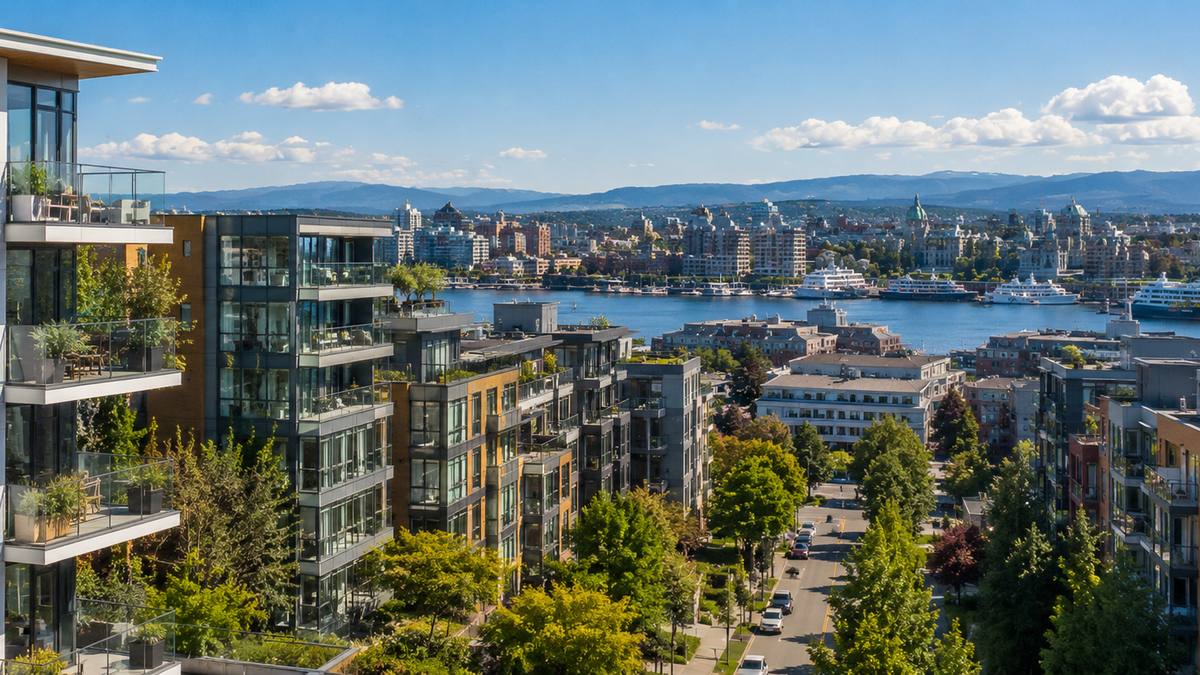
Downtown’s strongest residential views can include the Inner Harbour, Parliament Buildings, Olympic Mountains, Sooke Hills, city skyline and upper harbour. View quality depends on floor height, orientation, adjacent sites and the likelihood of future development.
Buyers should distinguish a currently open view from one that has some degree of long-term protection. A parking lot or low-rise neighbouring building may be redeveloped. Review surrounding zoning, active development applications and the physical relationship between nearby parcels when a view materially affects the purchase price. Compare additional Downtown Victoria view condos for sale.
Old Town, Chinatown & Inner Harbour Condos
The western portion of Downtown contains Victoria’s strongest concentration of historic commercial fabric. Old Town, Chinatown, Market Square, lower Johnson Street and the harbour edge combine heritage architecture, restaurants, retail, tourism and converted residential buildings.
This part of Downtown can be exceptionally atmospheric and walkable, but buyers should compare loading activity, nightlife, pedestrian traffic, seasonal tourism, nearby restaurants and bars, and the amount of natural light reaching lower-floor suites on narrower streets.
Harris Green Condos for Sale
Harris Green and the eastern side of the urban core have seen substantial residential intensification, with modern towers and mixed-use projects around Yates, Johnson, Pandora, Cook and Vancouver streets. Grocery stores, fitness facilities, restaurants, transit and everyday services are generally close.
Buyers here should pay close attention to active construction sites and future redevelopment. A neighbourhood that is convenient today may also be changing quickly, affecting views, traffic patterns, street activity and construction noise over the next several years.
Ground-Level Strata & Townhome-Style Downtown Condos
Townhome inventory in the immediate Downtown core is limited compared with condos, but urban row-home and townhouse-style properties do appear in and around the core. They can provide private entrances, patios or rooftop space and a stronger sense of separation than apartment living while retaining a central address.
Because supply is thin, Downtown-oriented buyers often broaden the search into James Bay, Fairfield, North Park, Harris Green and other central neighbourhoods. Compare current Downtown Victoria townhomes.
Downtown Victoria Condos With Parking & Storage
Downtown is one of the few Greater Victoria markets where many owners can realistically reduce their dependence on a private vehicle. That does not make parking irrelevant. A secure titled or limited-common-property stall can still carry significant value, particularly for larger or higher-priced suites.
Never assume a listing includes parking simply because the building has an underground garage. Some stalls are rented, wait-listed, assigned, licensed or otherwise governed by strata arrangements. Storage lockers should also be confirmed rather than inferred from listing photographs or building practice.
EV Charging in Downtown Victoria Condo Buildings
Electric-vehicle capability varies materially by building. Newer projects may offer energized stalls, shared charging infrastructure or load-managed systems, while older buildings may require substantial electrical planning before more chargers can be added.
An advertisement describing a building as “EV ready” should be verified against the actual stall, strata records and current approval process. Buyers should determine whether the stall already has charging, whether installation requires council approval, whether electrical capacity is available and who is responsible for installation and operating costs.
Downtown Noise, Street Exposure & Privacy
Urban living involves trade-offs that vary from block to block. Traffic, emergency vehicles, buses, restaurants, patios, nightlife, delivery activity, construction and major events can all affect a suite differently depending on floor, orientation, glazing and bedroom placement.
Buyers who are sensitive to noise should visit the property at more than one time of day. A courtyard-facing unit can live very differently from a suite directly above an active commercial street, even when both are in the same building.
Street Conditions & Block-by-Block Differences
Downtown also concentrates social services, nightlife, tourism and public activity. Street conditions can therefore differ noticeably between blocks and at different times of day. Buyers should assess the immediate building entrance, parkade access, lighting, nearby uses and walking route to the places they expect to use regularly.
This is a more useful exercise than making a blanket judgment about Downtown as a whole. A building facing a quieter side street, landscaped courtyard or the harbour can provide a substantially different living experience from one facing a major traffic or late-night corridor.
Sun Exposure, Heat & Air Conditioning
Large windows and high floors can be major selling features, but orientation matters. South- and west-facing suites may receive excellent light and views while also experiencing significant solar gain during warmer weather. North- facing units may be cooler but darker.
Confirm whether the suite has a heat pump or other cooling system, whether portable air conditioners are permitted, and whether balcony or window design limits ventilation. In glass-heavy buildings, thermal comfort should be treated as part of the purchase decision rather than an afterthought.
Newer Condos for Sale in Downtown Victoria
Downtown and Harris Green continue to absorb a significant share of Victoria’s attached-housing growth. Newer projects may offer modern building systems, efficient layouts, contemporary finishes, air conditioning, bike facilities, EV infrastructure and extensive common amenities.
New construction still requires careful comparison. Unit efficiency, strata fees, warranty status, assignment rules, GST where applicable, parking, storage, future construction nearby and the long-term cost of amenity-heavy buildings all matter. Browse new condos Downtown Victoria for broader current inventory.
Older Downtown Victoria Condo Buildings
Older strata buildings can provide larger rooms, more conventional floor plans and lower purchase prices than recent towers. The offset is that buyers may face upcoming expenditures for roofs, windows, elevators, plumbing, electrical, parkades, balconies, building envelopes or mechanical equipment.
The correct question is not simply whether a building is old. It is whether the building has been competently maintained, whether major systems have been renewed, whether the contingency reserve fund is adequate and whether the strata has a realistic plan for future capital work.
Strata Fees, Contingency Funds & Special Levies
Downtown strata fees vary widely because building services vary widely. A simple low-rise building with few amenities should not be compared directly with a tower offering elevators, concierge services, pools, fitness rooms, guest suites and extensive common areas.
A low monthly fee is not automatically a sign of value if the strata is deferring necessary maintenance. Buyers should read the depreciation report together with recent budgets, financial statements, contingency balances, council minutes and any discussion of future special levies.
Condo Insurance & Deductibles
Building insurance is a major Downtown condo due-diligence item. Review the strata corporation’s current insurance summary, major deductibles and any coverage limitations. Unit owners should then obtain their own condominium insurance appropriate to the building’s deductible structure and their personal improvements.
Insurance should be reviewed before subject removal rather than after possession, especially if the building has unusually high water-loss deductibles or other terms that could affect individual-owner exposure.
Pets, Rentals & Strata Bylaws
Pet and rental rules vary by strata corporation. A listing that says “pet friendly” may still contain limits on number, size or type of animal. Rental rights should likewise be checked against current provincial legislation and the building’s bylaws rather than summarized from an older listing.
Buyers should review the complete current bylaw package and any recent proposed amendments. Rules concerning smoking, barbecues, move-in procedures, flooring, renovations, bicycles, storage and use of common amenities can materially affect day-to-day ownership.
Short-Term Rentals: Verify Current Law, Not Historic Use
As of 2026, Victoria is subject to B.C.’s provincial principal-residence requirement for short-term rentals. Provincial registration requirements also apply. A condo that historically permitted vacation rentals, or a building that was once marketed as short-term-rental friendly, should not be assumed to permit unrestricted investor STR use today. Confirm current provincial law, City of Victoria requirements and strata bylaws before relying on rental income.
Current provincial information: B.C. principal residence requirement.
Downtown Victoria vs. James Bay
Downtown generally offers greater density, newer towers, more nightlife, employment and immediate access to restaurants and shopping. James Bay is typically more residential, with Beacon Hill Park, Dallas Road, Fisherman’s Wharf and a broader mix of older condo buildings and quieter streets.
Buyers deciding between the two should compare the importance of urban energy against a calmer residential environment, as well as building age, parking, waterfront access, views and walking distance to daily services.
Downtown Victoria vs. Fairfield
Fairfield offers a lower-density residential setting with Cook Street Village, character houses, low-rise condo buildings, parks and easier access to Dallas Road. Downtown offers substantially more high-rise inventory, employment, entertainment and car-light convenience.
Buyers who want an urban tower or heritage loft will usually find more choice Downtown. Buyers prioritizing tree-lined residential streets, beaches and a stronger neighbourhood feel may prefer Fairfield while remaining close to the core.
Downtown Victoria vs. Songhees
Songhees, across the Inner Harbour in Victoria West, is one of the city’s strongest waterfront condo districts. It can offer a quieter residential atmosphere and direct shoreline pathways while remaining within walking distance of Downtown across the Johnson Street Bridge.
Downtown generally provides more immediate access to offices, restaurants, theatres and historic commercial streets. Songhees may appeal more strongly to buyers who place a premium on waterfront surroundings and separation from the busiest parts of the core.
DOWNTOWN VICTORIA CONTEXT
Old Town, the Harbour & a Changing Urban Core
Downtown’s unusual combination of historic buildings and modern towers reflects Victoria’s development from a nineteenth-century harbour and trading centre into the Capital Region’s principal metropolitan core.
1840s
Fort Victoria & the Harbour
The early colonial settlement grew around the Hudson’s Bay Company post and harbour, establishing the street and commercial pattern from which central Victoria developed.
Old Town
Commercial Heritage
Historic warehouses, shops and commercial buildings now form one of the region’s most recognizable heritage districts, with many structures adapted to modern residential and mixed uses.
Chinatown
A Distinct Historic District
Chinatown remains a major part of Downtown’s architectural and cultural identity and continues to influence the character of nearby residential conversions and new development.
Urban Core
Attached Housing Growth
City planning continues to direct substantial residential and employment growth toward Downtown and Harris Green, making attached housing central to the future of the neighbourhood.
Inner Harbour
Working Harbour + Public Realm
The harbour remains simultaneously a transportation gateway, tourism centre, recreational asset and working waterfront, creating an urban setting that is unusual in Canadian downtown markets.
Today
Heritage Beside High-Rise Living
Modern towers, heritage conversions, offices, hotels, restaurants and public spaces now coexist within a compact area where individual blocks can have markedly different real-estate character.
Planning context reviewed against current City of Victoria Official Community Plan material for Downtown and Harris Green. View the City’s Downtown directions.
Buying a Condo in Downtown Victoria
Downtown buyers should treat the building and the location as seriously as the suite. Review the unit’s exact exposure, noise environment, parking, storage, cooling, view, floor plan and condition, then examine the strata corporation’s finances, insurance, depreciation report, minutes, bylaws and planned capital work.
For newer projects, also confirm warranty coverage, remaining deficiencies, GST implications where applicable, parking and storage rights, EV arrangements and future construction nearby. For heritage conversions, understand the building’s special maintenance and alteration constraints.
Current Downtown Victoria Condo MLS® Listings
Use this page to search current Downtown Victoria condo MLS® listings, including high-rise condominiums, studios, one- and two-bedroom apartments, luxury penthouses, heritage lofts, newer mixed-use strata residences and harbour- or skyline-view condos.
Compare listings by exact block, construction type, building age, floor height, orientation, parking, storage, EV capability, strata fees, contingency funding, insurance, bylaws, noise exposure, view protection and proximity to the Inner Harbour, Old Town, Chinatown, Harris Green and everyday services.