


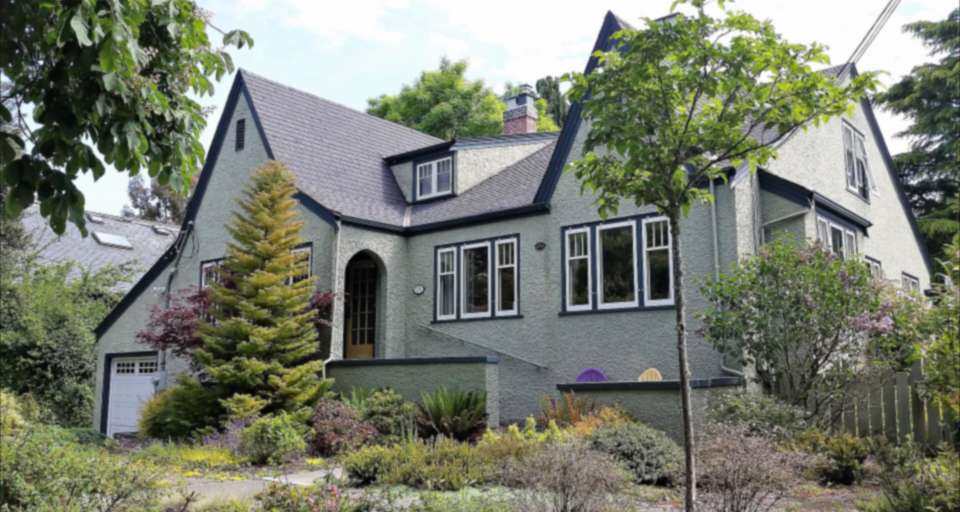
Updated October 30, 2026, after the Bank of Canada's October 28 rate increase.
Financing a home in Greater Victoria means passing a stress test at a rate well above the one you will actually pay, choosing between an insured and an uninsured mortgage, and proving a down payment that runs from about $30,000 on a benchmark Victoria condo to more than $100,000 on a benchmark house. This guide covers every step from pre-approval to completion, with the federal and BC rules as they stand on October 30, 2026.
In this guide
- Pre-qualified, pre-approved, approved
- The mortgage stress test
- Minimum down payment
- Mortgage insurance premiums
- GDS, TDS and how income counts
- Worked example: a Victoria condo
- Choosing the mortgage itself
- The rate environment
- Where the down payment comes from
- Strata, leasehold, co-op and 55+
- New construction and presales
- Newcomers and non-residents
- Financing subjects and low appraisals
- Closing costs to budget
- Broker, bank or credit union
- Timeline: pre-approval to keys
- Questions buyers ask
Pre-qualified, pre-approved and approved are not the same thing
Buyers often say they are "approved" when what they hold is an estimate. The step that actually protects you only happens after your offer is accepted.
Pre-qualification
A quick estimate built on what you tell a lender or an online calculator. Little or nothing is verified.
- Good for setting a budget
- Not something to write an offer on
Pre-approval
The lender pulls your credit, reviews income and down payment documents and sets a maximum. Many hold a rate for 60 to 130 days, depending on the lender.
- Not a guarantee of a mortgage
- Says nothing yet about the property
Final approval
After an accepted offer, the lender reviews the specific home, re-checks your file and, for an insured loan, gets the insurer's approval.
- Issued as a written commitment with conditions
- Only now should a financing subject come off
What lenders verify
- Identity and status: government ID, and for newcomers proof of permanent residence or a work permit.
- Income: an employment letter, recent pay stubs and often T4s or Notices of Assessment. Self-employed borrowers are typically asked for two years of Notices of Assessment and full returns.
- Credit: your report and score. For an insured mortgage, at least one borrower or guarantor needs a score of 600 or more.
- Debts: every monthly obligation, including car and student loans, support payments, cards and lines of credit.
- Down payment and closing funds: where the money came from and how long it has been in your accounts.
- The property: its value, title and insurability and, for a condo or townhouse, the strata corporation's documents.
The mortgage stress test (minimum qualifying rate)
Every insured mortgage in Canada, and every uninsured mortgage from a federally regulated lender such as a bank, must be qualified at the minimum qualifying rate: the greater of your contract rate plus 2 percentage points, or 5.25%. You pay the contract rate, but you must show you could afford payments at the qualifying rate. The rule covers fixed and variable mortgages of every term.
| Contract rate offered | Contract rate + 2 points | Floor | You qualify at |
|---|---|---|---|
| 2.99% | 4.99% | 5.25% | 5.25% (the floor applies) |
| 3.75% | 5.75% | 5.25% | 5.75% |
| 4.25% | 6.25% | 5.25% | 6.25% |
| 4.75% | 6.75% | 5.25% | 6.75% |
For insured mortgages (less than 20% down), the federal mortgage insurance rules have required this qualifying rate since June 1, 2021, and they apply to every lender, credit unions included. For uninsured mortgages at banks and other federally regulated lenders, the rule comes from the Office of the Superintendent of Financial Institutions (OSFI) and its Guideline B-20. OSFI reviews the floor and buffer at least once a year, and in January 2026 it left both unchanged.
Switching lenders at renewal: the November 2024 change
Since November 21, 2024, OSFI no longer expects a federally regulated lender to apply the qualifying rate to an uninsured mortgage that moves to it at renewal as a straight switch: the same loan amount and no longer remaining amortization. Insured mortgages already had that exemption under the federal rules, and from December 16, 2024 it was extended to lender-insured ("low-ratio") mortgages, with up to $3,000 allowed for transaction costs. Renewing with your current lender has never required requalifying. Borrowing more, extending the amortization or refinancing means you are tested again.
Credit unions and the loan-to-income cap
BC credit unions are regulated by the BC Financial Services Authority (BCFSA), not OSFI, so Guideline B-20 does not bind their uninsured loans. Provincial guidance expects them to build an interest-rate buffer into affordability, and many use the same qualifying rate as the banks, but policies differ, which is why buyers with unusual files often talk to a credit union. Separately, since each bank's 2025 fiscal year OSFI has limited the share of a lender's new uninsured mortgages above 4.5 times the borrower's income. It is a portfolio cap on the lender, not on any one borrower, but it can make very high loan-to-income files harder to place.
Minimum down payment, and the December 2024 changes
For mortgage insurance applications submitted since December 15, 2024, an insured mortgage is available on homes priced below $1.5 million (the cap had been $1 million since 2012):
- $500,000 or less: 5% of the price.
- $500,000 to under $1.5 million: 5% of the first $500,000 plus 10% of the rest.
- $1.5 million or more: 20% of the price, with an uninsured mortgage only.
| Example price | Minimum down | % of price |
|---|---|---|
| $450,000 | $22,500 | 5.0% |
| $547,800 (Victoria Core condo benchmark) | $29,780 | 5.4% |
| $750,000 | $50,000 | 6.7% |
| $1,280,100 (Victoria Core house benchmark) | $103,010 | 8.0% |
| $1,499,000 | $124,900 | 8.3% |
| $1,500,000 | $300,000 | 20.0% |
Benchmarks are the Victoria Real Estate Board's September 2026 figures for the Victoria Core. Note the cliff at $1.5 million: the last $1,000 of price more than doubles the down payment, because insurance is no longer available. Owner-occupied homes with three or four units need at least 10% down, and lenders may ask more of self-employed borrowers or those with weak credit.
30-year amortization for first-time buyers and new builds
Also from December 15, 2024, an insured mortgage can be amortized over up to 30 years (instead of 25) when the borrower is a first-time buyer or the home is newly built; from August 1, 2024 until then, a buyer had to be both. For this rule you are a first-time buyer if any of these is true:
- you have never purchased a home;
- in the current year or the previous four calendar years, you have not lived as your principal residence in a home owned by you or your current spouse or common-law partner; or
- your marriage or common-law relationship broke down in that period and you have been separated for at least 90 days.
A home is newly built if it has never been occupied as a residence. The insurers add 0.20% to the premium for an amortization beyond 25 years. Uninsured mortgages (20% or more down) are outside these rules, and many lenders already offer them over 30 years.
Mortgage default insurance premiums
With less than 20% down, your lender must insure the mortgage with one of Canada's three default insurers: Canada Mortgage and Housing Corporation (CMHC), Sagen or Canada Guaranty. The lender chooses the insurer and passes the cost to you. All three use the same standard rates, charged on the mortgage amount:
| Loan-to-value (down payment) | Premium | On $500,000 |
|---|---|---|
| Up to 65% (35% or more down) | 0.60% | $3,000 |
| 65.01% to 75% (25% to under 35% down) | 1.70% | $8,500 |
| 75.01% to 80% (20% to under 25% down) | 2.40% | $12,000 |
| 80.01% to 85% (15% to under 20% down) | 2.80% | $14,000 |
| 85.01% to 90% (10% to under 15% down) | 3.10% | $15,500 |
| 90.01% to 95% (5% to under 10% down) | 4.00% | $20,000 |
| 90.01% to 95% with a borrowed down payment (CMHC) | 4.50% | $22,500 |
| Amortization over 25 years, any tier | +0.20% | +$1,000 |
- Added to the loan. The premium is normally added to your mortgage and is non-refundable.
- No PST in BC. British Columbia does not charge provincial sales tax on the premium. CMHC lists Ontario, Quebec and Saskatchewan as the provinces that do, and there the tax must be paid in cash at closing.
- It protects the lender, not you. It is different from optional mortgage life or disability insurance, which covers your payments.
- At 20% or more down you normally pay no premium, unless the lender requires insurance anyway, as it may for some self-employed borrowers or those with weak credit. The lower tiers also apply to refinances and portability top-ups.
GDS, TDS and how lenders count your income
Lenders test affordability with two debt service ratios, both calculated at the qualifying rate:
Gross debt service (GDS)
Principal and interest (on the loan including the premium), property taxes, heating and 50% of any strata fee, divided by gross annual income. For a leasehold home, all of the ground rent is added.
Total debt service (TDS)
Everything in GDS plus all other debt payments. Credit cards and unsecured lines count at no less than 3% of the balance a month; a secured line counts as a 25-year amortized payment on its balance.
For uninsured mortgages each lender sets its own limits; many use similar figures and some flex them for strong files. Heating is an estimate: your actual costs if you have them, or a reasonable figure for the home's size, location and heating system.
Salaried and hourly income
- Base salary is the easiest income to use: a job letter, a recent pay stub, sometimes a T4.
- Overtime, bonus and commission are usually averaged over two years of tax documents, and may be discounted if they are falling.
- Probationary and contract work is acceptable to many lenders if you have a track record in the field.
Self-employed income
- CMHC recommends 24 months in business or in the same line of work, but will consider less with other strengths, such as strong reserves.
- Expect Notices of Assessment, full T1 returns with the business statement, and possibly reviewed or audited financial statements.
- For sole proprietors, insured lending may gross up income by 15% or add back eligible deductions.
Rental and suite income
Many Greater Victoria buyers count on a suite. For an insured mortgage on the home you are buying, CMHC allows up to 100% of the suite's gross rent to be added to your income for an owner-occupied two-unit home, and up to 50% for an owner-occupied three- or four-unit property or a two- to four-unit rental. A single unit you will not live in cannot be insured at all. Rent from other properties you own is counted either net of that property's expenses or as a partial add-back, with its mortgage payments in your debts.
Lenders differ on suites that were never permitted, and an appraiser may note one. Ask early whether the rent will count and what proof is needed: a lease, rent deposits or a market-rent estimate. For the zoning side, see secondary suites and Bill 44 in Victoria.
Illustrative example: a first-time buyer and a $550,000 condo
Illustrative example, with hypothetical figures. A first-time buyer agrees to buy a Victoria condo for $550,000, close to the Victoria Core benchmark. She puts the minimum down and chooses a 30-year amortization. The 4.25% five-year fixed contract rate is an assumption for the arithmetic, not a lender quote; payments are compounded semi-annually, as is standard for Canadian fixed-rate mortgages.
| Step | Calculation | Result |
|---|---|---|
| Minimum down payment | 5% of $500,000 + 10% of $50,000 | $30,000 |
| Mortgage before insurance | $550,000 - $30,000 | $520,000 |
| Loan-to-value | $520,000 / $550,000 | 94.5% |
| Premium rate | 4.00% (90.01% to 95%) + 0.20% (30 years) | 4.20% |
| Premium | 4.20% of $520,000 | $21,840 |
| Insured mortgage | $520,000 + $21,840 | $541,840 |
| Actual payment at 4.25% | 30 years, monthly | $2,653.76 |
| Qualifying rate | Greater of 4.25% + 2 = 6.25%, or 5.25% | 6.25% |
| Qualifying payment at 6.25% | 30 years, monthly | $3,308.11 |
| Property tax (assumed $2,400 a year) | Monthly | $200.00 |
| Heating (assumed) | Monthly | $75.00 |
| Strata fee (assumed $450 a month) | 50% counts | $225.00 |
| Housing costs for GDS | Monthly / yearly | $3,808.11 / $45,697.32 |
| GDS on $120,000 income | $45,697.32 / $120,000 | 38.1% (limit 39%) |
| TDS with a $350 car payment | ($3,808.11 + $350) x 12 / $120,000 | 41.6% (limit 44%) |
She qualifies on $120,000 of household income. The lowest income that keeps her GDS at 39% is about $117,200 ($45,697.32 divided by 0.39). Her real monthly cost is lower than the stress-tested figure: $2,653.76 for the mortgage plus $200 tax, $75 heat and the full $450 strata fee, or about $3,379.
Why the 30-year option matters at the stress test
Monthly mortgage payment in the illustrative example. Over 25 years the premium is 4.00% ($20,800), the insured loan is $540,800 and the qualifying payment rises to $3,540.84, pushing her GDS to 40.4%: on $120,000 of income she would not qualify.
On completion she also owes property transfer tax: $9,000 on $550,000 (1% of the first $200,000 plus 2% of the rest). As a qualifying first-time buyer she is exempt on the first $500,000, a saving of $8,000, so she pays $1,000. The other costs in the closing costs checklist come on top.
Choosing the mortgage itself
Fixed rate
The rate and payment are set for the term, most often five years.
- Easy to budget
- Breaking it early can trigger a large interest rate differential penalty
Adjustable rate
Prime plus or minus a margin; the payment changes whenever prime does.
- Payments rose after the October 2026 increase
- The penalty to break is usually three months' interest
Variable, fixed payment
The rate floats but the payment stays the same, so the share going to principal changes.
- Payment stability, amortization risk
- If rates rise far enough, the lender will require a higher payment
Term versus amortization
The term is how long your rate and conditions last, usually one to five years. The amortization is how long it would take to repay the whole loan, 25 or 30 years for most buyers. At the end of each term you renew, switch or repay. A longer amortization lowers the payment and helps you qualify, but adds interest over the life of the loan and, on an insured mortgage, the 0.20% surcharge.
Prepayment privileges and penalties
Closed mortgages let you prepay within set limits, typically an annual lump sum and an increase to your regular payment; most limits reset each year and do not carry forward. Open mortgages can be repaid any time but cost more. If you break a closed mortgage early, including when you sell, the penalty is usually the higher of three months' interest or the interest rate differential (IRD), roughly the interest the lender loses for the rest of the term because today's rates are lower than yours. Methods vary (some lenders compare posted rates rather than the discounted rate you paid), and the method can change the penalty a great deal.
Illustrative example. With $400,000 owing at 4.50% and 30 months left on a fixed term, three months' interest is about $4,500 ($400,000 x 4.50% x 3/12). If the lender's comparison rate for 30 months is 3.50%, a simplified IRD is $400,000 x 1.00% x 2.5 years = $10,000, so the penalty would be $10,000. Your lender's formula decides the real figure: get a written quote before you list a home.
Portability and assumability
Portability lets you move your mortgage, rate and terms to a new home and avoid the penalty; if you need more money, lenders usually blend your old rate with a new one on the extra amount, and you must qualify. Assumability lets a buyer take over a seller's mortgage with the lender's approval. Both depend on your contract, so read those clauses before you sign.
The rate environment in late 2026
On October 28, 2026 the Bank of Canada raised its policy rate by a quarter point to 2.50%, its first increase since July 2023, after seven straight decisions at 2.25%. The Bank said inflation had run around 3% since April and was expected to reach about 3.5% by year-end, driven largely by energy prices, and that the rate could need to rise further, though it would proceed carefully. The next decision is scheduled for December 9, 2026.
- Variable and adjustable rates follow lenders' prime rates, which rose by the same quarter point. National Bank's prime, for example, became 4.70% on October 29, 2026.
- Fixed rates are priced mainly off government bond yields, so they move with markets rather than on announcement day.
- Rate holds protect a pre-approved buyer if rates rise while shopping. Ask how long yours lasts and whether it can be extended.
This guide does not quote lender rates, which change daily and depend on your file. Compare offers on rate, term, prepayment privileges, penalty method and portability together.
Where the down payment comes from
First Home Savings Account (FHSA)
Contributions are deductible, growth is tax-free and a qualifying withdrawal for your first home is tax-free with nothing to repay. Room is $8,000 a year from the year you open it.
RRSP Home Buyers' Plan (HBP)
You borrow from your RRSP and repay over 15 years. Repayments normally start in the second year after the withdrawal; for a first withdrawal in 2026 to 2028 they start in the fifth year (a 2026 withdrawal is first repaid in 2031). A missed repayment is added to your income.
A gift from family
Insurers accept a non-repayable gift from a relative. Lenders want a signed gift letter and proof the money is in your account or with your lawyer before closing, and many accept only immediate family.
Savings and sale proceeds
Bank, TFSA and investment accounts, or the net proceeds of a home you are selling, in which case the lender wants the firm sale contract.
A couple can stack these: two FHSAs and two HBP withdrawals can put up to $200,000 toward one home, and the Canada Revenue Agency allows both programs for the same purchase. RRSP contributions made in the 90 days before an HBP withdrawal may not be deductible. CMHC also allows a borrowed down payment in limited cases, at the 4.50% premium, but not for non-permanent residents.
Proof of funds and the 90-day history
Lenders must know where your money came from, under anti-money-laundering rules as well as their own policies. Expect to provide about three months (90 days) of statements for each account holding the down payment, showing your name and account number. Deposits other than pay need an explanation and a paper trail; one national lender's published policy requires a documented source for any deposit of $10,000 or more. Move money early, avoid cash, and keep statements for any account you close.
Financing a strata unit, leasehold, co-op or 55+ home
Most Greater Victoria condos and many townhomes are strata properties, and the strata corporation's health becomes part of your loan. Many lenders rely on the appraisal and the information certificate; others also ask for the depreciation report, minutes or insurance certificate, especially for older buildings or where big repairs are coming.
- Form B Information Certificate. The strata must provide it within 7 days, for no more than $35 plus copying. It shows fees, approved special levies, the contingency reserve fund balance, legal proceedings and, since April 1, 2023, a summary of the strata's insurance, with the budget, rules and latest depreciation report attached.
- Depreciation report. Since July 1, 2024, stratas with five or more lots must get one every five years and can no longer waive it by a three-quarter vote. A big repair bill against a thin reserve means special levies are coming. See our guide to strata depreciation reports.
- Reserve contributions. Since November 1, 2023 a strata must put at least 10% of its operating budget into the reserve fund each year.
- Insurance deductibles. Water and earthquake deductibles can be very large, and an owner can be charged the deductible for damage that starts in their unit. Your condo policy should cover that exposure. See strata insurance deductibles.
- Special levies. Who pays a levy that is approved, or about to be voted on, should be settled in the contract.
Leasehold
Lenders focus on the years left on the lease; sample lender instructions require the remaining term to exceed the amortization by at least five years. Ground rent counts in full in GDS. First Nations reserve leaseholds use their own contract forms, and BC's rescission period does not apply to leasehold purchases.
Housing co-operative
With no land title to mortgage, buyers usually need a share loan, and credit unions are the most common lenders. Expect a larger down payment, fewer lenders and approval by the co-op's board.
55+ strata
Since November 24, 2022 a BC strata can restrict residents only to people 55 and over. Younger buyers can own a unit but may not be able to live in it. The smaller pool of buyers matters for resale, so tell your lender about the bylaw early.
New construction and presales
A presale, common in Langford, Colwood and downtown Victoria, separates the day you commit from the day you borrow, often by two years or more. That gap is the core risk.
- You cannot lock financing that far ahead. Rate holds run 60 to 130 days, so final approval comes near completion, when your income, debts, rates and even the rules may have changed.
- The appraisal happens at completion. If the unit appraises below your price, the lender lends on the lower value and you cover the difference.
- Failing to complete is costly. You can lose your deposit, and the developer can sue for its losses on a resale.
Under the Real Estate Development Marketing Act, presale deposits must be held in trust by a brokerage, lawyer or notary unless the developer has approved deposit insurance, and you have seven days to cancel after the later of signing and receiving the disclosure statement. New homes qualify for a 30-year insured amortization whether or not you are a first-time buyer, and they carry GST, with partial relief for some buyers; see our transaction taxes guide. Before signing, ask a lender what you would qualify for today with a buffer for higher rates, and read our guides to presales and new home warranty and new condo prices per square foot. Building on your own lot needs a progress-draw mortgage, which advances money in stages as work is confirmed.
Newcomers and non-residents
Newcomers living in Canada
- Permanent residents can use all of CMHC's homeowner products, with no minimum time in Canada.
- Work permit holders can get insured mortgages on owner-occupied homes of one to four units, if the purchase is not barred by the federal ban on non-Canadian buyers.
- Thin credit history: insurers accept alternatives such as an international credit report or a reference letter from a bank at home.
- BC's first-time buyer transfer tax exemption requires citizenship or permanent residence, plus a year living in BC or two BC tax returns.
Buyers living outside Canada
- The federal ban on non-Canadians buying residential property runs to January 1, 2027, with exceptions. Check it before you make an offer.
- A single unit you will not live in cannot be insured, so expect at least 20% down, and lenders often ask non-residents for more.
- Foreign nationals pay BC's additional 20% property transfer tax in the Capital Regional District, and the speculation and vacancy tax can apply to homes left empty.
The subject-to-financing clause and low appraisals
In BC the financing condition goes into the terms section of the Contract of Purchase and Sale. It gives you until a set date to obtain a mortgage you are satisfied with; if you cannot, the deal ends and your deposit is returned once both sides sign a release. BCFSA's template clause guidance suggests spelling out the loan you need (amount, maximum rate and amortization), and you are expected to make an honest effort to get it, not to use the clause as a free exit.
- Send everything the day the offer is accepted: the signed contract and addenda, the listing, the disclosure statement and, for a strata, the Form B, bylaws, minutes and depreciation report.
- Leave enough time. The lender needs an appraisal, a document review and, for an insured loan, insurer approval. Ask your lender how many business days to allow before you set the subject date.
- Read the commitment's conditions, such as a satisfactory appraisal, proof of down payment, a gift letter or the sale of your current home. Remove the subject only when you can meet them.
- Remove it in writing by the deadline. After that, a financing problem is your problem.
Illustrative example of an appraisal shortfall. You agree to pay $800,000 and plan 20% down: $160,000 cash and a $640,000 mortgage. The appraisal comes in at $780,000, and the lender lends 80% of the lower of price and value, or $624,000. You now need $176,000 in cash, $16,000 more than planned, or a lower price, or an insured mortgage and its premium. Insured lending works the same way: the down payment is calculated on the lower of price and appraised value, and you pay anything above it.
Between subject removal and completion, do not change jobs, take on new debt, co-sign for anyone or move your down payment without telling your lender. Many lenders re-check employment and credit before they release funds.
Closing costs to budget for
Lenders want to see that you can pay closing costs from your own funds, on top of the down payment.
- Property transfer tax: 1% of the first $200,000, 2% up to $2 million and 3% above, plus 2% more on residential value over $3 million. First-time buyers pay none on the first $500,000 of a home worth up to $835,000, with a partial exemption to $860,000. See our BC transaction taxes guide.
- GST on a newly built or substantially renovated home.
- Legal or notary fees and disbursements, including searches and registration, and title insurance if recommended.
- Appraisal and inspection: the lender's appraisal fee (sometimes paid by the lender) and your home inspection; see the home inspection guide.
- Strata documents: the Form B and copies of records.
- Adjustments for property taxes, strata fees and utilities the seller has prepaid, from the adjustment date.
- Home insurance from completion day, which the lender requires before it advances funds.
- Interest adjustment if your lender charges interest from completion to the start of the first payment period.
- Moving, utility hook-ups and immediate repairs.
Mortgage broker, bank or credit union?
Bank
Federally regulated, so OSFI's B-20 rules apply to its uninsured loans.
- Convenient if you bank there, and may offer relationship pricing
- Ask exactly how it calculates the IRD penalty
Credit union
Regulated by BCFSA, not OSFI, and often lends only in its home region.
- Can be more flexible on uninsured files, co-ops and unusual properties
- Insured loans follow the same federal rules as everyone's
Mortgage broker
Compares banks, credit unions, monoline lenders and, if needed, alternative and private lenders.
- Licensed by BCFSA under BC's Mortgage Services Act, in force October 13, 2026, which replaced the Mortgage Brokers Act
- Ask which lenders they deal with and how they are paid
Compare at least two written offers. The lowest rate is not always the cheapest mortgage once penalties, prepayment limits and restrictions are counted; some low-rate products cannot be ported or broken except on a sale.
Timeline: from pre-approval to the keys
Three to six months before you shop
PrepareCheck your credit report, pay down card balances, open an FHSA if you qualify, and make RRSP contributions at least 90 days before any HBP withdrawal. Keep three months of statements for every account holding your down payment.
Pre-approval
Rate held 60 to 130 daysGet a written maximum and a rate hold, and set your search budget below the maximum to leave room for closing costs.
Writing the offer
Your contract sets the datesInclude a specific financing subject with a realistic date, and completion and possession dates your lender and lawyer can meet.
Accepted offer: the subject period
The critical daysPay the deposit on time, send the contract and strata documents to your lender, book the inspection and get insurance quotes. The lender orders the appraisal and issues a commitment.
Subject removal
In writing, by the deadlineRemove subjects only when the commitment's conditions are met. From here the contract is firm.
Lawyer or notary
In the days before completionYour lender instructs your lawyer or notary. You sign the mortgage and transfer documents, confirm insurance, and deliver the rest of your down payment and closing costs by bank draft or wire.
Completion and possession
Registration at the Land Title OfficeThe transfer and mortgage are registered, the lender advances funds and the seller is paid. You get the keys on the possession date, often a day or more later.
Questions buyers ask
How much income do I need to buy a $550,000 condo in Victoria?
In our illustrative example, a first-time buyer with the minimum $30,000 down, a 30-year insured mortgage at an assumed 4.25%, $2,400 a year in property tax, $75 a month for heat and a $450 strata fee needs about $117,200 of household income to stay within the 39% GDS limit, before other debts. Different rates, taxes and fees change the answer.
Does the stress test apply when I renew?
Not if you renew with your current lender. Since November 21, 2024 you can also switch an uninsured mortgage to another federally regulated lender at renewal without requalifying, if the loan amount and remaining amortization do not increase. Insured mortgages have the same straight-switch exemption. Borrowing more or refinancing means you are tested again.
Can I get a 30-year amortization with 20% down?
The federal 30-year rule governs only insured mortgages with less than 20% down. With 20% or more, each lender sets its own maximum, and many offer 30 years. A longer amortization lowers the payment but increases the total interest.
Is mortgage default insurance the same as mortgage life insurance?
No. Default insurance from CMHC, Sagen or Canada Guaranty protects the lender if you stop paying, and is required with less than 20% down. Mortgage life and disability insurance are optional products that cover your payments or balance if you die or cannot work.
Can my parents give me the down payment?
Yes. A non-repayable gift from a relative is an accepted source for insured mortgages. Your lender will want a signed gift letter confirming it is not a loan and proof the money is in your account or with your lawyer before closing. Some lenders accept gifts only from immediate family.
What happens if the appraisal comes in below my price?
The lender bases the loan on the lower of price and appraised value, so you cover the gap in cash, renegotiate, or use a larger insured loan if you qualify. If your financing subject is still in place, you can also decline to proceed if you cannot get financing you are satisfied with.
Should I choose fixed or variable now that rates are rising?
It depends on your budget and tolerance for change. After the October 28, 2026 increase the Bank of Canada said rates could rise further, which matters most for adjustable payments. Fixed rates give certainty but can carry large IRD penalties if you break the mortgage. Compare rate, penalty method, prepayment privileges and portability together.
Do I need a lawyer or a notary to close?
Yes, in practice. In BC a lawyer or notary public prepares and registers the transfer and your mortgage at the Land Title Office, receives your lender's funds and pays the seller. Book one as soon as your offer is accepted.
Know your budget? Start looking
Browse homes that fit your pre-approval, and read how to turn it into a strong offer.
Lower-priced condosWriting an offer in BCAsk a questionPhoto from Wikimedia Commons, used under the licence linked in the caption.