Living in Langford, BC: neighbourhoods, parks, lakes, growth, amenities, commuting, and real estate in one of Greater Victoria’s fastest-growing communities.
Langford is one of the fastest-growing and most development-oriented municipalities in Greater Victoria. Once known more for rough edges, older commercial strips, and lower-cost housing, Langford has changed dramatically over the last few decades into a major Westshore centre with shopping, schools, recreation facilities, newer subdivisions, condos, townhomes, golf, lakes, trails, and a wide range of real estate options.
Langford is often attractive to buyers who want more home for the money than they may find in Victoria, Oak Bay, Fairfield, James Bay, or parts of Saanich. It offers a large selection of newer homes, family houses, townhomes, condos, mobile and manufactured homes, lake-area properties, view homes, and larger parcels. For current listings, see Langford Properties for Sale.
At the same time, Langford is not for everyone. The same growth that created housing choice has also brought traffic, congestion, construction, density, parking issues, and ongoing debate over whether infrastructure has kept pace with development. Buyers should compare Langford carefully by neighbourhood, commute, property type, and lifestyle fit.
Langford Location and Real Estate Search
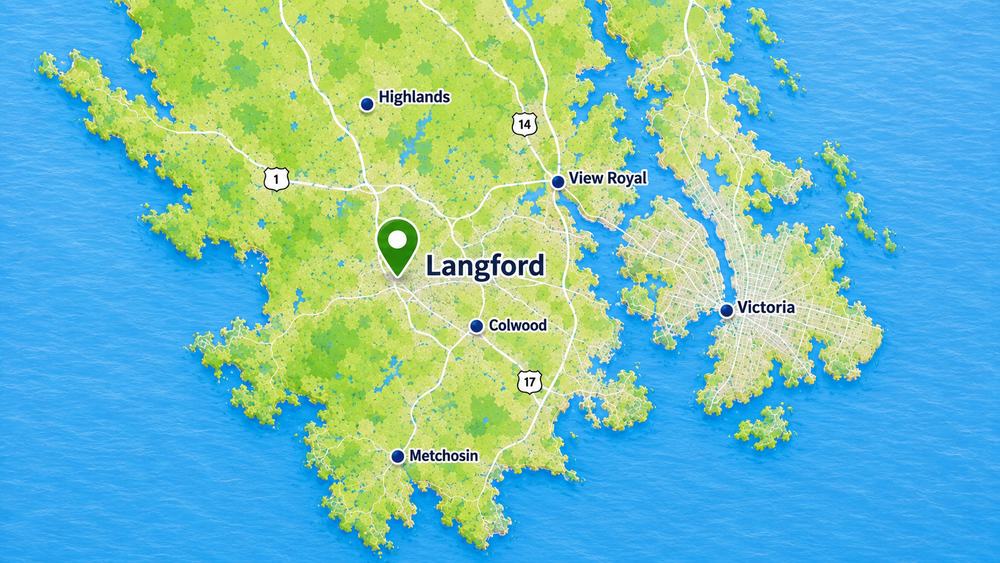
Langford is part of the Westshore area of Greater Victoria, west of the core and close to Colwood, View Royal, Metchosin, Highlands, and Sooke. Its location gives buyers access to lakes, trails, shopping, schools, recreation, newer housing, and many of the day-to-day services that make the Westshore practical for families, commuters, first-time buyers, and downsizers. Langford can offer more space and newer construction than many core neighbourhoods, but commute patterns, traffic, road exposure, and the feel of each specific neighbourhood should be considered carefully.
Langford has long been known as a municipality that encourages growth, construction, and new housing. For many years, that approach helped create a large share of the Westshore’s new real estate inventory. Developers were able to build houses, townhouses, condos, and mixed-use projects in a way that was much more difficult in some older and more restrictive municipalities.
That development-friendly approach helped make Langford more affordable than many core areas and gave buyers more choice. It also helped create major shopping areas, new neighbourhoods, sports facilities, schools, and modern infrastructure. However, rapid growth has also created real concerns about traffic, density, narrow roads, parking, construction disruption, and whether the city can keep up with its own pace of expansion.
More recently, many Langford residents have become more cautious about the speed of development. Political changes and public debate over growth, amenity contributions, infrastructure, taxes, and municipal planning have become part of the local conversation. Buyers should understand that Langford is still evolving, and different neighbourhoods may change significantly over time.
Langford City Hall and Local Planning
Langford’s modern identity is closely tied to municipal planning, development policy, and local government decisions. The city’s growth-oriented approach helped transform the area from a more modest and sometimes overlooked Westshore community into a major residential, commercial, and recreational centre. That growth has created opportunity, but it has also produced disagreement over density.
Langford History
Langford has a deeper history than its modern growth boom might suggest. The area was named after Captain Langford, a retired British army officer who came to Fort Victoria on behalf of the Hudson’s Bay Company and was connected with the company’s Colwood farm holdings. In the late 1800s, Langford was known as a day-trip and holiday destination for Victorians, with Goldstream House, hunting lodges around Langford Lake, and rail access through the Esquimalt and Nanaimo Railway.
In the early 1900s, Langford declined along with the broader real estate downturn that affected Greater Victoria for many decades. For a long period, it lagged behind more established parts of the region. Its modern transformation came much later, as the Westshore grew and Langford became one of the main places where new housing, commercial development, and suburban expansion could occur.
Langford Neighbourhoods and Areas
Langford is not one uniform market. Different areas attract different buyers and offer very different lifestyles.
Bear Mountain is one of Langford’s best-known areas, with golf, resort-style amenities, executive homes, condos, townhomes, trails, and hillside view properties. It can appeal to buyers who want newer housing, views, recreation, and a more polished setting. Buyers may compare Langford view homes, condos, townhomes, and larger detached homes in this area.
Westhills is a planned community with newer homes, townhomes, schools, parks, and modern suburban infrastructure. It often appeals to families and buyers looking for newer construction, especially those comparing Langford houses and Langford townhomes.
Happy Valley includes newer subdivisions, family homes, townhomes, and growing residential areas. Buyers often look here for schools, parks, and family-oriented housing, but should compare density, traffic, and nearby construction carefully.
Glen Lake has a more established feel in some pockets and benefits from access to lake recreation, parks, and central Langford amenities. Depending on the listing mix, buyers may compare houses, condos, townhomes, and lake-area properties near Glen Lake.
Florence Lake offers a mix of lake-area appeal, condos, homes, and convenient access to services. Buyers interested in water proximity should also compare Langford waterfront and lake-area homes.
Thetis Heights and nearby areas can appeal to buyers who want access to parks, trails, and routes toward View Royal or Victoria.
Downtown Langford and the Goldstream Avenue area are more commercial and service-oriented, with shopping, restaurants, condos, mixed-use development, transit, and everyday services. Condo and townhome buyers often focus here because of convenience and walkability.
Bear Mountain
Bear Mountain is Langford’s most prominent resort-style development and one of its best-known real estate areas. It was developed around golf, recreation, hillside homes, condos, townhomes, and a resort setting. The area has had a colourful history, including financial difficulty during the real estate downturn and later recovery under new ownership and continued development.
Today, Bear Mountain attracts buyers looking for views, golf, trails, newer homes, executive properties, and a more upscale setting than many parts of Langford. Buyers should still evaluate commute, strata structure, slope, driveway access, lot usability, and whether the resort-style setting fits their day-to-day lifestyle.
Parks, Lakes and Recreation
One of Langford’s strongest lifestyle advantages is access to recreation. Langford Lake, Glen Lake, Florence Lake, Bear Mountain trails, Mill Hill, nearby Thetis Lake access, Goldstream-area recreation, sports facilities, and Westshore parks all contribute to the area’s appeal.
For families, active buyers, dog owners, and people who want outdoor recreation close to home, Langford can be very practical. It does not have the same older character as Fairfield, Oak Bay, or James Bay, but it offers lakes, trails, sports facilities, newer neighbourhoods, and a wide range of suburban conveniences.
Shopping, Services and Amenities
Langford has become one of the main shopping and service centres for the Westshore. Westshore Town Centre, Millstream Village, big-box retail, grocery stores, restaurants, fitness facilities, schools, recreation centres, and everyday services make the area convenient for daily living.
This convenience is one of the reasons Langford continues to attract buyers. Many people can find more attainable housing without giving up access to shopping and services. The trade-off is that commercial corridors and busy roads can feel more hectic than older, quieter neighbourhoods elsewhere in Greater Victoria.
Traffic and the Colwood Crawl
Traffic is one of Langford’s most important drawbacks. Many residents of the Western Communities, including Langford, Colwood, Metchosin, parts of View Royal, and surrounding areas, commute toward Victoria for work. During peak morning and afternoon periods, congestion can add significant time and frustration to what might otherwise appear to be a short drive.
The commuter bottleneck commonly known as the Colwood Crawl remains a major consideration for buyers. Langford may look close to Victoria on a map, but the real commute depends on time of day, weather, accidents, route, and where the property is located within Langford.
For buyers who work in the Westshore, work from home, or do not need to commute daily into the core, Langford can be far more practical. For buyers commuting every day to downtown Victoria, Oak Bay, Saanich, Esquimalt, or the Peninsula, the commute should be tested carefully before buying.
Langford Lifestyle and Buyer Fit
Langford often attracts younger buyers, families, tradespeople, first-time buyers, investors, and people looking for more housing value than they may find closer to the core. The area can feel newer, faster-paced, and more active than some older Greater Victoria municipalities.
That is not necessarily a negative. Many buyers like Langford’s energy, newer housing, shopping, sports facilities, trails, lakes, and family-oriented neighbourhoods. Others may prefer quieter or more established communities such as Colwood, View Royal, Sidney, Oak Bay, Fairfield, rural Saanich, or the Peninsula.
The key is to be honest about lifestyle fit. Langford can be a very good choice for the right buyer, but it is not the same experience as living in Victoria’s older core neighbourhoods or the quieter Peninsula communities.
Retirees and Downsizers in Langford
Langford has increasingly attracted retirees and buyers from other parts of Canada who want the Greater Victoria climate and lifestyle but need more attainable pricing than they may find in the core. Condos, townhomes, smaller houses, and newer developments can appeal to buyers looking to downsize while staying close to shopping, healthcare, recreation, and outdoor amenities.
For retirees, Langford can work well if the property and location are chosen carefully. Important considerations include stairs, elevators, walkability, traffic exposure, transit, medical access, strata rules, outdoor maintenance, and whether the neighbourhood feels manageable day to day.
Pros and Cons of Living in Langford
Langford’s advantages include relative affordability, newer housing, shopping, schools, recreation, sports facilities, trails, lakes, family-oriented neighbourhoods, and a large variety of property types. It can offer a practical way into Greater Victoria real estate for buyers who need more space or newer construction than they can afford in the core.
The drawbacks include traffic, commuting pressure, density, construction, smaller lots in some areas, parking issues, and ongoing debate about growth and infrastructure. Buyers should not judge Langford only by price or online photos. The surrounding street, commute, neighbourhood density, and future development nearby can all affect the long-term experience of living there.
Langford Real Estate and Neighbourhood Choice
Langford’s real estate market is closely tied to its neighbourhoods. A Bear Mountain view home, a Westhills family house, a Happy Valley newer home, a Glen Lake property, a downtown Langford condo, and a larger rural-edge parcel may all be in Langford, but they are not the same kind of purchase.
Buyers should compare property type, location, commute, traffic exposure, density, school access, recreation, strata rules, future development, and neighbourhood feel before deciding which part of Langford is the best fit.