


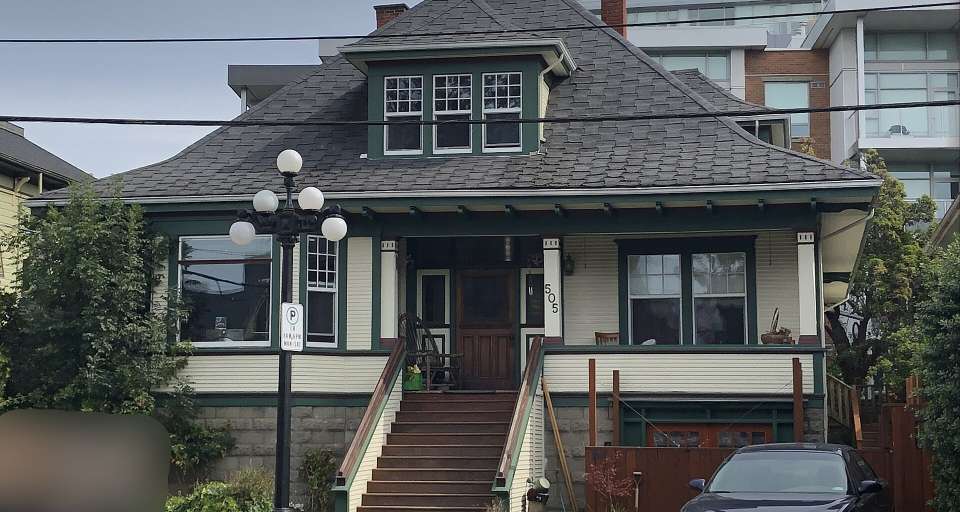
Published October 2026, with the provincial Bill 25 changes, the 2024 BC Building Code and tenancy rules in force today.
Since June 2024, most Greater Victoria lots that used to allow one house now allow three to six homes, and almost every house can have a suite or a garden suite. That has made suites easier to build and more valuable, but it has not made every existing suite legal. Before you buy a home with a suite, or add one, you need to know what the zoning allows, whether the suite was ever permitted, what the Building Code demands, and how lenders, insurers, tenancy law and short-term rental rules treat it.
In this guide
What Bill 44 changed
The Housing Statutes (Residential Development) Amendment Act, 2023, known as Bill 44, was introduced in November 2023. It requires local governments to zone for small-scale multi-unit housing (SSMUH) on lots that had been restricted to single-family homes or duplexes, without a rezoning application or a public hearing. Councils had until June 30, 2024 to update their zoning bylaws. By late July 2024 the Province reported that 162 of 188 local governments had done so, including Victoria, Saanich, Oak Bay, Esquimalt, Langford, Colwood and Central Saanich.
| Lot and location | Minimum homes that must be allowed |
|---|---|
| Lot of 280 square metres or less (about 3,014 sq ft), inside an urban containment boundary or a municipality over 5,000 people | 3 |
| Lot larger than 280 square metres, same areas | 4 |
| Lot of 281 square metres or more, wholly or partly within 400 m of a prescribed bus stop with frequent service | 6, and no on-site parking may be required |
| Other single-family zones anywhere in BC, including smaller communities | A secondary suite or a detached accessory dwelling unit (garden suite, laneway home or carriage house) |
A "frequent" stop is one served by at least one route every 15 minutes on average from 7 a.m. to 7 p.m. on weekdays and 10 a.m. to 6 p.m. on weekends. The Province's Provincial Policy Manual sets out the site standards, such as setbacks, height and lot coverage, that local governments were expected to use so the extra homes are actually buildable.
The exemptions
- Hazards: land where a qualified professional reports a hazard, such as flooding, landslide or tsunami risk, that cannot reasonably be mitigated.
- Heritage: land protected for heritage conservation when the law came into force.
- Servicing: land not connected to both municipal or regional water and sewer.
- Large lots: parcels larger than 4,050 square metres (about an acre), or in zones where the minimum lot size for subdivision is larger than that.
- Transit-oriented areas, which have their own, higher-density rules (below), and land under the Islands Trust or in manufactured home zones.
Bill 25: the 2025 tightening
Bill 25 (2025) broadened the rules. A zone in which even one lot is limited to a single house or duplex is now a Restricted Zone, and every lot in it must meet the minimums. The definition also captures zones that allow only a house with a suite and a detached accessory unit. Affected councils had to adopt compliant bylaws by June 30, 2026 and must update their official community plans by June 30, 2027. The Minister can grant extensions for infrastructure upgrades, health and safety risks or extraordinary circumstances, but not beyond December 31, 2030.
Transit-oriented areas (Bill 47)
A companion law, the Housing Statutes (Transit-Oriented Areas) Amendment Act, 2023 (Bill 47), designates transit-oriented areas (TOAs) within 400 m of prescribed bus exchanges. In the Capital Regional District, the minimum height and density a municipality must be prepared to allow are 10 storeys and a floor area ratio of 3.5 within 200 m of the exchange, and 6 storeys and 2.5 between 200 and 400 m. Councils may not require off-street residential parking in a TOA. These are minimum allowable levels that the municipality must be prepared to permit, not automatic building rights, so in most cases a project still needs an application.
The regulation names the Legislature Exchange in Victoria and the Uptown Exchange in Saanich. Saanich's own TOA bylaw, in effect June 30, 2024, covers four hubs: Uptown, the University of Victoria, Royal Oak and Victoria General Hospital. Provincial material also shows TOAs in Colwood, Langford and View Royal. Land inside a TOA is excluded from the small-scale rules, so check with the municipality which regime applies to a particular lot.
How each municipality responded
The provincial rules set minimums; each council wrote its own bylaws on top. This is a summary at the level confirmed in municipal documents. Zoning changes often, so confirm the rules for a specific lot with the municipality before you buy or design.
Victoria
Zoning Regulation Bylaw s. 52: up to 3 homes on lots of 280 square metres or less, 4 on larger lots, and 6 where any part of the lot is within 400 m of a prescribed bus stop, with no vehicle parking required for six-unit projects. Garden suites are allowed under Schedule M.
Worth knowing: Lots under 230 square metres or under 7.5 m average width are excluded, as are heritage, TOA, unserviced and very large lots. The earlier Missing Middle rules (adopted January 26, 2023) still allow houseplexes, corner townhouses and heritage-conserving infill of up to six homes on many lots, with a development permit.
Saanich
SSMUH amendments took effect June 30, 2024: 3 to 6 homes on residential lots inside the Urban Containment Boundary, without rezoning, depending on lot size and location.
Worth knowing: Five or more units need a form and character development permit. The owner-occupancy requirement for suites and garden suites was removed, and a lot can have both. Outside the boundary, one secondary suite is allowed.
Oak Bay
June 2024 amendments: up to 3 homes on lots of 280 square metres or less and 4 on larger residential lots, as strata or rental.
Worth knowing: Heritage-designated lots are limited to 2 units unless a heritage revitalization agreement allows more. Three or four units need an infill development permit; Uplands lots need Council's siting and design approval.
Esquimalt
Adopted in spring 2024: an RSM-1 small-lot zone (3 units) and an RSM-2 zone for lots of 280 to 4,050 square metres (4 units).
Worth knowing: You must build at least three units to use these zones. The Township reports no provincially recognized frequent-transit stops, so there is no six-unit tier, and lots in high tsunami-risk areas were exempted.
Langford
Bylaw No. 2183 (2024): 3 homes on lots of 280 square metres or less; 4 on larger lots, for example a house with a suite plus a garden suite; 6 within 400 m of a prescribed transit stop.
Worth knowing: No off-street parking is required on six-unit lots near transit. Suites are allowed in all one-family homes in the listed zones, and the minimum lot for a garden suite fell to 400 square metres.
Colwood
On the Province's 2024 list of compliant communities. In 2026 the City brought Bylaw No. 2091 forward to add SSMUH rules allowing 3 to 6 homes to its restricted zones, with readings set for June and July 2026.
Worth knowing: Check whether the 2026 amendments have been adopted, and whether a lot near the Colwood Exchange falls in the TOA instead.
Central Saanich
Bylaw No. 2196 (June 24, 2024): the Residential Neighbourhood zone allows 3 or 4 units by lot size (up to 6 on large lots); the Residential Corridor zone allows 4, 6 or 8.
Worth knowing: One extra unit may be allowed if it is fully accessible and secured by covenant. Outside the urban containment boundary, one suite or accessory unit; on ALR land, only a secondary suite.
Legal, non-conforming or unauthorized?
"Legal suite" is used loosely in listings. In practice a suite falls into one of three groups, and the difference affects financing, insurance, resale value and your liability.
Permitted (authorized)
- Allowed by zoning
- Built or converted under building, plumbing and electrical permits
- Inspected, with a final occupancy permit or final inspection on file
- The City of Victoria defines a legal suite in exactly these terms
Lawful but non-conforming
- Built legally under the rules of its day
- No longer meets every current zoning or code requirement
- Can generally continue as it is
- Major alterations may have to meet current rules
Unauthorized
- Built without permits, or not allowed by zoning when built
- May not meet fire separation, egress or ventilation rules
- The municipality can require upgrades or removal, and may register a notice on title
- Lenders and insurers may not recognize it
Because suites are now permitted almost everywhere, many unauthorized suites can be legalized: the zoning obstacle has largely gone, leaving the Building Code and permit process. How much work that takes depends on the suite. A basement with low ceilings, no fire separation and a shared furnace can need far more than paperwork.
For sellers, BCREA's legal team notes that the regulator treats known unauthorized accommodation as a material latent defect, which a seller who knows about it must disclose to a buyer in writing before a contract is signed. A separate hydro or gas meter is not proof that a suite is legal.
How to verify a suite before you buy
- Read the listing closely. Words like "in-law", "mortgage helper" or "suite potential" are not claims of legality. Ask the listing side in writing what permits exist.
- Check the zoning. Use the municipality's map service (VicMap in Victoria, SaanichMap in Saanich) or call the planning department, and confirm whether the lot is in an SSMUH zone, a TOA or an exempt area.
- Pull the permit history. Victoria's VicMap shows the year built, the last approved use and all building, plumbing and electrical permits, and can produce a free property status letter. Retained plans can be viewed through a paid plan search at the owner's request. Other municipalities have their own property information requests, and some release records only with the owner's written authorization, so ask the seller for one.
- Search the title. A notice of bylaw contravention on title is a strong sign of an unauthorized suite, and covenants may restrict the use of the land.
- Ask the seller to confirm in writing whether the suite has permits and a final inspection, and get copies.
- Have it inspected. A qualified home inspector can check fire separation, smoke and carbon monoxide alarm interconnection, ceiling heights, exits and egress windows; the home inspection guide explains what to expect.
- Talk to your lender and insurer before you remove conditions, and tell them exactly what the suite is.
- Write it into the offer. Make the purchase subject to your satisfaction with the suite's permit status, so you can walk away if it is not what was described; the guide to writing an offer covers subject clauses.
BC Building Code requirements for a secondary suite
Under the 2024 BC Building Code, a secondary suite is a self-contained dwelling unit within a house that contains no more than two dwelling units in total. These are the main Part 9 requirements, drawn from municipal guides to the 2024 code. Your building official has the final word, and the code is amended from time to time.
| Requirement | What the 2024 code asks for |
|---|---|
| Fire separation between the suite and the main home | 45 minutes; reduced to 30 minutes with extra interconnected photoelectric smoke alarms; 15 minutes if every smoke alarm in the house is photoelectric and interconnected; none if the whole building is sprinklered |
| Smoke alarms | Interconnected alarms in each suite, in bedrooms and the hallways serving them |
| Carbon monoxide alarms | Where there is a fuel-fired appliance or an attached garage, in or within 5 m of each bedroom, interconnected throughout |
| Ceiling height | 2.1 m in new construction (1.95 m over stairs). Saanich's guide lists an alternative for existing houses of 1.95 m in the suite and 1.85 m under existing beams and ducts |
| Bedroom egress window | Openable area of at least 0.35 square metres with no dimension under 380 mm, and 760 mm clear in front of it in any window well (not required if sprinklered) |
| Sound | STC 43 or ASTC 40, or a specified assembly with insulation and resilient channel |
| Heating and ventilation | A shared system must shut down to stop smoke circulating; fire dampers where ducts pass through the separation; separate temperature control for each unit; a continuous principal exhaust fan in each |
| Exits and doors | Usually a separate exterior exit; exit stairs and paths at least 860 mm wide; entrance doors need a viewer or glazing, and sliding glass doors cannot be the suite entrance |
The Province has also proposed adding a lower-cost "smoke-tight barrier" option from the National Building Code for small suites (up to 80 square metres and 80% of the main unit's area) with all smoke alarms interconnected. It was circulated for public review in December 2025; check whether it has been adopted before relying on it.
What drives the cost of bringing a suite up to code
No reliable published range exists for Greater Victoria, because the work varies so much from house to house. The big cost drivers are predictable, though: ceiling height (lowering a floor or rerouting ducts is expensive), fire separation (new drywall on ceilings and walls, often with ductwork and wiring disturbed), heating (separating or adding a system), egress windows (cutting foundation walls and digging wells), electrical service upgrades and sound separation. Add design, permit and inspection fees. Get a building official's view and a contractor's written estimate during your subject period, not after.
Why suite status matters
Mortgage qualification
For an owner-occupied two-unit home, CMHC allows up to 100% of the suite's gross rent to be added to your income when you qualify for an insured mortgage; for three or four units it is up to 50% of gross rent, or a net rental approach. Lenders apply their own policies on top of these limits, and some will not count rent from a suite that is not permitted, or will count less of it. See the mortgage financing guide.
Financing a new suite
Since January 15, 2025, owners can refinance with mortgage insurance to add a secondary suite, borrowing up to 90% of the home's post-renovation value on homes worth up to $2 million, with up to 30 years' amortization. BC's forgivable-loan pilot for new suites stopped taking applications after March 30, 2025.
Insurance
A standard home policy may not cover a rented suite. Tell your insurer about any suite, permitted or not, and buy the coverage it requires; an undisclosed suite can put your coverage for the whole house at risk after a fire or flood. Tenants need their own contents insurance.
Assessment and taxes
Assessments reflect market value as of July 1 and the property's physical condition and permitted use as of October 31, so a completed suite can show up in the next roll. Ask the municipality whether any utility or licensing charges apply. For transfer tax and other purchase costs, see BC real estate transaction taxes.
Resale and appraisal
Buyers, appraisers and lenders all price a permitted suite differently from an unauthorized one. An appraiser should compare it with sales of homes whose suites have the same status; see how appraisers support adjustments.
Liability
As owner and landlord you are responsible for a safe unit. If a tenant is hurt in a suite without proper fire separation or egress, the consequences are serious. The municipality can fine you, order upgrades or removal, and register a notice on title.
Garden suites and laneway homes
A detached accessory dwelling unit goes by many names: garden suite, laneway home, carriage house, coach house. The provincial rules let every single-family lot have either a suite or one of these, and the SSMUH zones allow combinations. Local details differ:
- Victoria allows garden suites on most lots with a single detached house under Schedule M, through a staff-approved development permit plus building permits. The application fee is rising from $1,000 to $2,000. A property that already has a secondary suite or a duplex is not eligible, small-lot zones are excluded, and since May 1, 2023 new garden suites must meet Step 3 of the BC Energy Step Code. Garden suites cannot be strata-titled or sold separately, and the City says they cannot be used as short-term rentals.
- Saanich allows a secondary suite and a garden suite on the same lot and no longer requires the owner to live on the property.
- Langford reduced the minimum lot size for a garden suite to 400 square metres, and allows a house with a suite plus a garden suite on lots over 280 square metres.
- Oak Bay limits detached accessory units to two storeys, including any basement, and 6 m in height (7.5 m to the top of the roof).
- Central Saanich allows one secondary suite or accessory unit outside its urban containment boundary; on ALR land only a secondary suite is permitted.
A garden suite is a separate building, so it brings its own servicing, fire access, tree protection and design questions. If you are buying a home with one, verify its permits exactly as you would for a suite.
Short-term rentals
Since May 1, 2024, BC's principal residence requirement has limited short-term rentals in larger communities to the host's own home, plus one secondary suite or accessory dwelling unit on the same property. It applies in Victoria, Saanich, Oak Bay, Esquimalt, View Royal, Colwood, Langford, Sooke and Sidney, among others. Hosts must also register every unit with the provincial registry ($100 a year for the principal residence, $450 for each secondary unit), and must follow local bylaws and licensing as a condition of registration.
- A suite in a house you do not live in cannot be a short-term rental in these communities.
- Victoria says its garden suites cannot be used as short-term rentals.
- Strata corporations can limit or ban short-term rentals by a three-quarter vote, with fines of up to $1,000 a day.
- A short-term rental is not a tenancy, so it brings none of the stability, and none of the protections, of a long-term rental.
Buying a home with a tenant
A sale does not end a tenancy. If you buy a house with a tenant in the suite, or in the whole house, the tenancy carries on with you as landlord unless it is ended properly under the Residential Tenancy Act.
If you plan to live in the rented space
- Remove all conditions first. The seller can only end the tenancy for your use once the sale is firm and you have asked in writing.
- The seller generates the notice through the Residential Tenancy Branch web portal (required for purchaser's-use notices since July 18, 2024), on your behalf as purchaser.
- Notice period: three months for notices generated on or after August 21, 2024, and the tenant has 21 days to dispute. Plan your completion and possession dates around it.
- Who can move in: you, or a close family member (your spouse, or the parents or children of you or your spouse), and you must be an individual intending in good faith to occupy.
- You must live there at least 12 months, starting within a reasonable time after the tenancy ends.
- The tenant receives one month's rent as compensation, and can leave earlier on 10 days' notice. If the unit is not used as stated, the landlord can be ordered to pay the tenant 12 months' rent.
Purchaser's-use and landlord's-use notices are not available for a rental unit in a building with five or more rental units that is not stratified. A landlord moving in personally now also gives three months' notice with 21 days to dispute, for notices on or after June 18, 2025. If you want vacant possession, make it a term of the contract and give the timeline room; if you plan to keep the tenant, get the tenancy agreement, rent history and deposit details before you remove conditions.
Strata and suites
- Long-term rentals cannot be banned. Since November 24, 2022, strata bylaws restricting long-term rentals have no effect. Short-term rentals can still be restricted.
- Adding a suite inside a strata lot needs municipal permits and usually the strata corporation's written approval of the alterations under its bylaws.
- A secondary suite cannot be stratified and sold on its own; Oak Bay's guide states this, and Victoria's garden suites cannot be strata-titled. New SSMUH projects, by contrast, can be built as strata units in some municipalities, Oak Bay among them.
- Bare land stratas and older subdivisions may carry bylaws, covenants or building schemes that limit what can be built, whatever the new zoning says.
Before you buy a strata home with a suite or plan one, read the bylaws, minutes and depreciation report. The free BC Strata Documentation Inquisitor (also available as a Claude version) reads uploaded strata documents and produces a red-flag report as an aid to your own review and your professionals' advice, not a replacement for them. See also the guide to buying a condo in Victoria.
Buyer's checklist
- Zoning confirmed for the specific lot: SSMUH tier, TOA or exempt area.
- Permit history pulled, with a final inspection or occupancy permit for the suite.
- Title searched for bylaw contravention notices, covenants and building schemes.
- Seller's written statement on the suite's permit status, with copies.
- Home inspection covering fire separation, alarms, ceiling heights, egress and heating.
- Lender confirms how much of the suite's rent it will count.
- Insurer confirms coverage for a house with a rented suite.
- Tenancy documents reviewed, or a purchaser's-use notice timeline built into the dates.
- For short-term rental plans: principal residence rules, registration and any strata bylaws checked.
- For future building: setbacks, servicing, trees and design guidelines checked with the municipality, and a cost estimate in hand.
Questions and answers
Can I add a suite to my house now that Bill 44 is law?
In most of Greater Victoria the zoning now permits a secondary suite or a detached accessory unit, and often more. You still need a building permit, and the suite must meet the BC Building Code. Covenants or building schemes on title and, for a strata, the strata bylaws can still restrict what you build, so check them first.
Does the new zoning mean I can build a fourplex on any lot?
No. The minimums depend on lot size, location and transit, and exempt lots include hazard lands, heritage-protected land, lots not connected to both water and sewer, lots larger than 4,050 square metres and transit-oriented areas. Setbacks, height, lot coverage, servicing, development permits and covenants on title can all reduce what is practical.
What is the difference between a secondary suite and a garden suite?
A secondary suite is a self-contained unit inside a house, such as a basement suite. A garden suite, laneway home or carriage house is a separate, detached building on the same lot. Both have their own kitchen, bathroom and sleeping area, and both need permits.
Is it illegal to buy a house with an unauthorized suite?
No. The risk lies in owning and renting it. The municipality can require you to upgrade or remove it, lenders may not count its rent, insurers need to know about it, and you carry the liability if it is unsafe. Many unauthorized suites can now be legalized because the zoning allows them, but the Building Code work can be substantial.
Will a lender count the rent from a suite?
For an owner-occupied home with one suite, CMHC's rules allow up to 100% of the suite's gross rent to be added to your income for an insured mortgage. Lenders apply their own policies on top, and some will not count rent from a suite that is not permitted, or will count only part of it. Ask before you rely on the rent.
Can I rent my suite on Airbnb?
Only if the suite is on the same property as your principal residence. In Victoria, Saanich, Oak Bay, Esquimalt, Langford, Colwood and other larger communities, short-term rentals are limited to the host's home plus one secondary suite or accessory unit. You must register each unit with the provincial registry and follow local bylaws, and Victoria says its garden suites cannot be short-term rentals.
I am buying a house with a tenant in the suite. Can my family move in?
Yes, if you or a close family member will genuinely live there for at least 12 months. Once all conditions are removed, you ask the seller in writing to end the tenancy, and the seller generates a notice through the Residential Tenancy Branch portal. The notice period is three months, the tenant has 21 days to dispute it and receives one month's rent as compensation.
Can a suite or garden suite be sold separately?
A secondary suite cannot be stratified and sold on its own, and Victoria's garden suites cannot be strata-titled. Some new small-scale multi-unit projects can be built as strata units, depending on the municipality, but converting an existing house and suite into separate titles is a different and much harder process.
Will adding a suite raise my property assessment?
It can. BC Assessment values property as of July 1 and reflects its physical condition and permitted use as of October 31, so a completed suite can be reflected in the next assessment. Whether your property taxes change depends on how your assessment moves relative to others in your municipality.
Looking at a home with a suite?
Know what you are buying: get a thorough inspection and check how your lender will treat the suite before you remove conditions.
Home inspection guideMortgage financing guideAsk a questionPhoto from Wikimedia Commons, used under the licence linked in the caption.