What Counts as a Lot Under One Acre
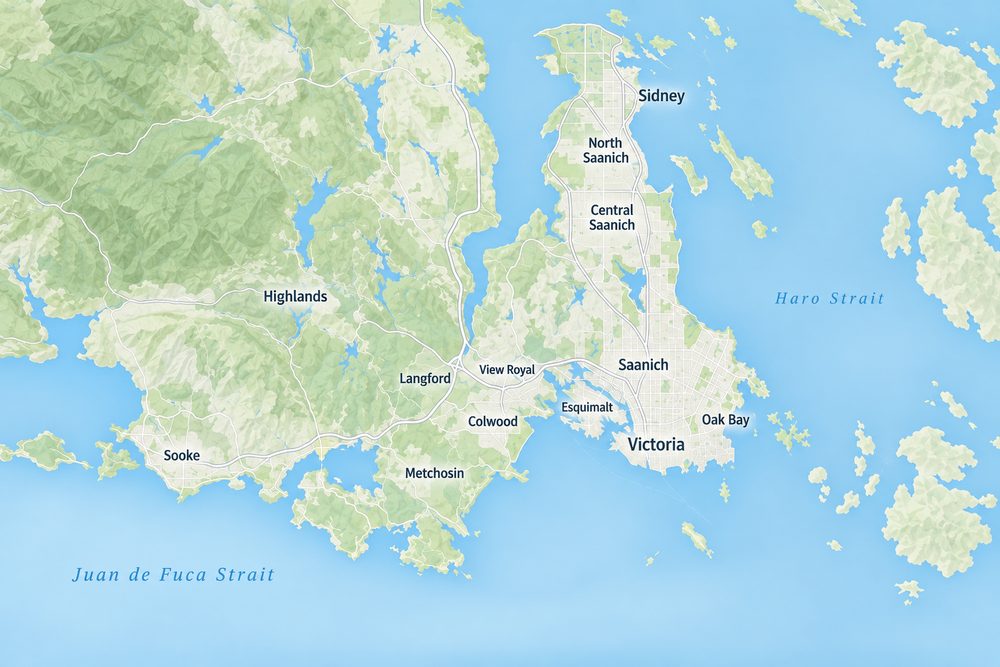
One acre is 43,560 square feet, or about 4,047 square metres. Most city and suburban building lots in Greater Victoria are a fraction of that, so this category takes in almost every serviced residential lot in the region, from compact infill lots to generous lots in neighbourhoods such as Ten Mile Point and Cordova Bay.
Some lots in this category are listed as land even though an older house still stands on them. The asking price reflects the land and what the zoning allows, rather than the building, which a buyer may plan to replace. For land over an acre, see land over one acre, and for the full picture, all Greater Victoria lots and land.
Where Lots Under One Acre Come Up
Saanich, Oak Bay and Esquimalt
In the core municipalities, a vacant lot is usually the result of a subdivision or of an older house being sold for its land. Saanich, the largest of the core municipalities, has more room for infill than Oak Bay or Esquimalt, where lots are rarer and usually smaller. In the City of Victoria itself, a vacant lot almost always means a subdivision or a redevelopment site. See Saanich acreages and lots, Oak Bay lots and land and Esquimalt lots and land.
Langford, Colwood and View Royal
The Westshore is where new building lots are created on purpose. Bear Mountain, on the slopes of Skirt Mountain in Langford, is one of the places where subdivision lots come to market, often with views, and Colwood's hillside neighbourhoods such as Triangle Mountain add more. Browse Bear Mountain lots and Langford acreages and land.
Sooke, Sidney and the Saanich Peninsula
Sooke offers lots near the town centre and in neighbourhoods such as Saseenos, usually at a lower price than comparable lots in the core. On the Saanich Peninsula, Sidney's lots are small and walkable to Beacon Avenue, while North Saanich lots near Deep Cove and Swartz Bay tend to be larger and quieter. Search Sooke acreages, lots and land and Saanich Peninsula acreages and land.
Infill Lots in the Core: What to Expect
An infill lot sits in an established street, so the neighbours, the trees and the services are already there. That is its strength and its challenge. Existing water and sewer connections may be old or undersized for a new home with suites, frontage works may be required, and the design has to fit the setbacks, heights and site coverage of the zone. A lot with lane access can make a garden suite or carriage house much easier to plan.
Ask for the subdivision plan if the lot is newly created. It shows the legal boundaries, any easements and any covenants registered as a condition of the subdivision, such as tree retention areas or limits on driveway locations.
New Subdivision Lots on the Westshore
Hillside subdivisions in Langford and Colwood sell serviced lots with roads, water and sewer in place. They often come with a building scheme and design guidelines, and GST generally applies to the purchase. Under BC's Real Estate Development Marketing Act, a developer marketing five or more subdivision lots must file a disclosure statement with the BC Financial Services Authority and give buyers a copy before they sign, so read it for the servicing, the covenants and the developer's commitments.
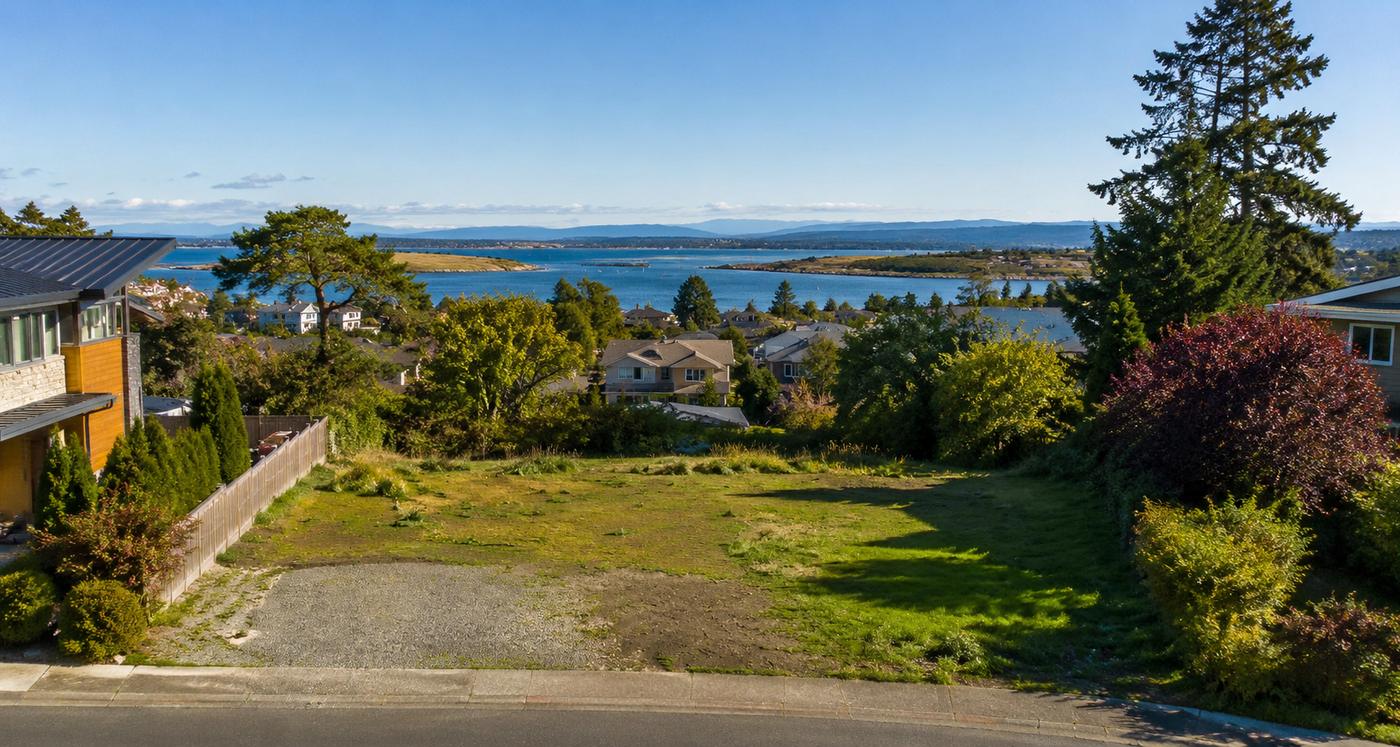
Many of these lots have views, and the best of them sit at the top of steep driveways. The view lots and land page covers what to look for when a lot's outlook is part of its price.
Buying an Older House for Its Land
In the core municipalities, the most common source of a building lot is an older house on a generous lot. Before you buy one to replace, check whether the house is listed on the municipal heritage register, what a demolition permit requires, and whether the lot could be subdivided under the current zone. Under WorkSafeBC rules, an older building must be inspected for hazardous materials such as asbestos by a qualified person before demolition begins, and the removal cost can be significant.
Keep the house in use while you plan if you can. A home that is lived in or rented long-term usually qualifies for an exemption from the speculation and vacancy tax, and once building activity starts there is a separate exemption for land under development.
Choosing Between Two Lots
When two lots look similar on paper, these details usually decide it:
- Orientation. A lot with its long side to the south gets more sun in the garden and the main rooms.
- Width and frontage. A wider lot gives more design freedom and easier parking than a deep, narrow one.
- Slope and rock. A gentle slope can add a walkout lower level; a steep or rocky one adds cost.
- Access. A lane or a second frontage makes suites and parking simpler.
- Location. Schools, transit and shopping matter as much for a new home as for a resale one; see the Greater Victoria schools guide.
Zoning, Suites and Small-Scale Multi-Unit Housing
Zoning decides what a lot is worth, and the rules for residential lots changed when the province introduced small-scale multi-unit housing. Municipalities must now allow at least three units on many lots zoned for a single-family home or duplex that are 280 square metres or smaller, four units on larger lots, and six units on larger lots near a bus stop with frequent service.
Langford's version is a good example of how a municipality writes the rules: up to three units on lots of 280 square metres or less, up to four on lots of 281 square metres or more, such as a house with a suite and a garden suite, and up to six within 400 metres of a prescribed transit stop. Each municipality sets its own setbacks, heights, parking and design rules, so confirm the zone for the specific lot before you price in extra units.
Units Allowed Is Not Units Buildable
A lot's shape, slope, frontage, trees and access can limit what actually fits, even when the zoning allows three or four units. Ask a designer or builder to sketch a site plan before you pay for density the lot cannot hold.
Servicing a City or Suburban Lot
A lot with water, sewer, storm drainage and hydro at the property line is the easiest to build on, but services are rarely free. Budget for connection fees, development cost charges, and any road or sidewalk improvements the municipality requires along the frontage. Ask the municipality's engineering department for a servicing estimate before you remove subjects.
Not every lot under an acre is on sewer. Some lots in the Sooke area, North Saanich and rural Saanich rely on an onsite septic system, which must be designed and installed by an Authorized Person, either a Registered Onsite Wastewater Practitioner or a professional, who files the design with Island Health and certifies the system when it is finished. A small lot leaves less room for a septic field, so a site assessment matters even more.
Slopes, Rock and Trees on a Building Lot
Many of the region's lots are on hillsides or bedrock. A steep or rocky lot can still be a good buy, with views and privacy, but it usually needs more engineering: a geotechnical review, retaining walls, rock removal and a longer driveway. Factor those costs into the price you offer, not after you own the land.
Trees deserve a look as well. Many municipalities protect larger trees and require a permit and replacement trees to remove them, so an arborist's report can change where the house goes. On land near a creek, the riparian rules that apply across the Capital Regional District set a 30-metre assessment area on each side of the stream.
Lots Under One Acre at a Glance
| Lot type | Where it comes up | Usually suits | Check first |
|---|
| Infill lot | Saanich, Esquimalt, Oak Bay, Victoria | A new home, a home with suites or a small multi-unit project | Zoning, frontage and servicing costs |
| Older house on a large lot | Established neighbourhoods across the core | Replacing the house, or subdividing where zoning allows | Demolition, tree rules and subdivision potential |
| New subdivision lot | Langford, Colwood and other hillside areas | A custom home in a planned neighbourhood | Building scheme, design rules and GST |
| Village or semi-rural lot | Sooke, Sidney, North Saanich | A quieter setting at a different price point | Sewer or septic, and access |
GST and Other Costs on a Building Lot
Most sales of vacant land by individuals are exempt from GST. GST generally applies, though, when the seller is in the business of selling land, when the land was used primarily in a business, or when the lot comes from a parcel subdivided into more than two parts. In practice that covers most new subdivision lots, so check whether an asking price includes GST before you compare two lots.
If the lot is classified as residential and sits empty, the provincial speculation and vacancy tax can apply, since all 13 Greater Victoria municipalities are taxable areas. Owners declare each year by March 31, and there is an exemption for land under development that counts steps such as applying for permits. The buying guide covers the property transfer tax and closing costs.
Building Schemes, Covenants and Design Rules
New subdivisions often register a building scheme or restrictive covenants on title, setting out house size, materials, height, fencing or tree planting. These rules can protect the look of a neighbourhood and its views, but they also limit your design, so read them before you commission plans. Older lots may carry easements or rights-of-way for utilities or access that shape where you can build.
Building on Your Lot
A licensed residential builder must provide home warranty insurance on a new home. If you prefer to build for yourself, you must pass an exam and obtain an Owner Builder Authorization from BC Housing first, and you remain personally liable for defects for ten years if you sell. In most cases an owner builder cannot sell until the home is complete and they have lived in it for a year.
A Lot or a House on a Large Lot?
If you want space without starting from bare land, compare these lots with homes on large lots of 15,000 square feet to one acre. An existing house can be lived in while you plan, rented out, or replaced later, and the land underneath is often what you are really paying for. For more room again, the acreage searches start with homes on one to three acres.
Searching Lots by Municipality
Each of these pages narrows the search to one municipality or community, with lots and larger land together:
Lots Under One Acre: Common Questions
Can I build a suite or a second home on a lot under one acre?
Often, yes. Provincial rules require municipalities to allow a secondary suite or an accessory dwelling unit in single-family zones, and three or four units on many urban lots. The zone, lot size and site conditions decide what fits.
Are lots under an acre always on municipal sewer?
No. Most lots in the core and the Westshore are, but some in the Sooke area, North Saanich and rural Saanich use a septic system. Confirm servicing for each lot.
Do I need a survey before I build?
For a new home, the municipality will usually need a site plan from a BC land surveyor showing the property lines and the proposed building, and a survey is worth having before you buy if the boundaries are unclear on the ground.