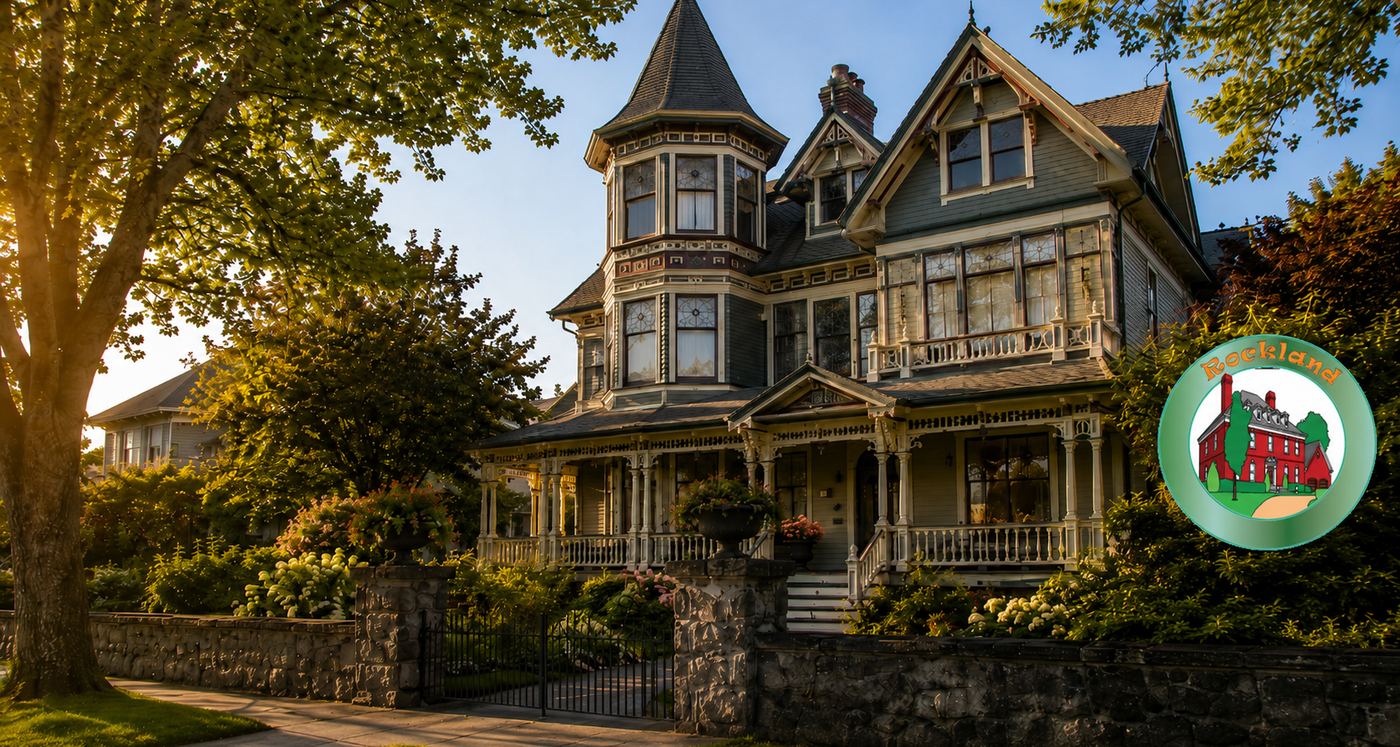
Explore Rockland, one of Victoria BC’s original premier residential neighbourhoods, known for historic mansions, mature gardens, Craigdarroch Castle, Government House, and classic Victoria character.
Rockland is one of Victoria’s most historic and prestigious neighbourhoods, known for grand old homes, mature gardens, stone walls, tree-lined streets, and a residential atmosphere that still reflects the wealth and ambition of early Victoria.
This is where many of Victoria’s wealthy upper-class pioneers built stately mansions and estate properties during the boom years of the mid-1800s through the early 1900s. The most famous nearby example is Craigdarroch Castle, built by coal baron Robert Dunsmuir, but Rockland Avenue and the surrounding streets hold many other stories of merchants, judges, politicians, real estate men, newspaper owners, doctors, and business families.
Rockland is not just another central Victoria neighbourhood. Its appeal comes from the combination of location, architecture, history, mature landscaping, walkability, and old residential prestige. A short walk can take you toward Government House, Craigdarroch Castle, the Art Gallery of Greater Victoria, Cook Street Village, Oak Bay Avenue, Fairfield, Fernwood, or downtown Victoria.
Rockland is where the wealthy upper-class pioneers of Victoria built many of their stately mansions and luxury properties during the heyday of Victoria’s mid-1800s real estate boom, a period that continued into the early 1900s. It was customary in those days for prominent residents to give names to their estates, and Rockland Avenue became a street of famous men, famous families, and famous homes.
The most famous nearby example is Craigdarroch Castle, built for coal baron Robert Dunsmuir. But Rockland’s importance is not limited to one landmark. The neighbourhood as a whole reflects Victoria’s early wealth, real estate speculation, architecture, social hierarchy, and later evolution from grand private estates into a more varied mix of houses, condos, townhomes, conversions, and strata properties.
Rockland’s older estate homes and mansion properties are part of what gives the neighbourhood its distinct historic character.Craigdarroch Castle remains Rockland’s best-known landmark and one of Victoria’s clearest symbols of nineteenth-century wealth.
Why Rockland Developed Before Oak Bay
Rockland Avenue was where the who’s who of Victoria resided because of its relatively close proximity to the downtown core. That was extremely important before the advent of the automobile, when horses, horse-drawn carriages, and walking were the normal ways of getting around town.
Areas like Oak Bay were then largely outside the practical residential pattern of the city and were used mainly for farming, with large acreages rather than suburban homes. Rockland, by contrast, was close, elevated, visually interesting, and suitable for the grand homes of the period.
The neighbourhood also had natural advantages. Its topography sloped toward the water, offering good water views from many of the early homes built there, as well as an interesting streetscape and ambience. Rockland’s combination of elevation, views, proximity, and prestige helped make it Victoria’s original premier luxury residential area.
The Real Estate Boom and Streetcar Era
A substantial increase in real estate values began in the mid-1880s in Victoria, when the population was increasing rapidly and streetcars were introduced. This was a period of booming construction, and many of the fine homes went up on Rockland Avenue during this era.
Streetcars, land companies, subdivision activity, speculation, and population growth changed the city. Rockland was one of the places where that change appeared in the form of substantial residences, named estates, coach houses, gardens, stone walls, and private grounds.
Rockland Avenue and the Estate Tradition
Rockland Avenue was the great residential spine of the neighbourhood. In the late 1800s and early 1900s, it became a street of prominent residents and notable homes. It was customary for important houses and estates to be given names, and many Rockland properties were known as much by their estate names as by their street addresses.
Robert Irving’s “Gisburn” residence on Rockland Avenue was a showplace of the time. Julius Brethour, a powerful North Saanich farmer-politician, and his brother Henry were also part of this older Victoria world. The old records and notes connected with Rockland include merchants, landowners, politicians, lawyers, judges, doctors, financiers, ranchers, newspaper figures, and real estate men.
Early Homes on St. Charles Street
Built around this period were the dwellings of Judge Harold Robertson at the northwest corner of Rockland Avenue and St. Charles Street, J. Wilson at 811 St. Charles Street, and Bert Todd almost next door at No. 841.
Todd sold his dwelling to the Dunsmuirs, who changed the name to “Westover,” a small town in northwest Virginia for which Mrs. J. Dunsmuir had great affection. The stables of this residence in Shasta Place, later converted to a dwelling, still bear the name “Westover.” The present No. 841 marks the spot where the entrance gates once led to the large house “Westover,” built by Bert Todd above what is now Shasta Place.
At No. 1005 St. Charles Street is the former home of Simon Leiser, wholesale grocer, while No. 628 of the same street was built by James Ogden Grahame, son of the James Allan Grahame who married Mary Work. These details matter because they show how Rockland and the surrounding streets were tied into Victoria’s early business, social, and family networks.
Rockland, Land Companies and Early Speculation
Thomas Galpin had his firm managed by P. R. Brown, who later founded P. R. Brown & Sons Ltd., likely one of Victoria’s oldest real estate companies. Other associates of Galpin included Arthur Wolfenden and Cuyler A. Holland, whose home on Rockland Avenue is part of the wider story of the area.
B.C. Land & Investment was Victoria’s principal marketer of land during the 1900-1914 boom. At one time it owned or controlled half of the land in the Victoria area. Its holdings included the McTavish estate, which comprised much of James Bay, and the Douglas estate, which included much of Fairfield: 500 acres from Heywood Avenue to Ross Bay Cemetery and from Rockland to Dallas Road, including the 33 acres of Government House grounds for which the Province paid a rental of $40.50 per year.
Rockland Avenue: Famous Men and Famous Homes
Rockland Avenue was the street of famous men and famous homes at that time. Several older addresses and estate names help explain why the neighbourhood still carries such a strong historical identity.
1300 Rockland Avenue was the former site of “Gisburn,” built in the 1880s and owned successively by Robert Irving, J. B. Hobson, retired financier, and Jack Rithet.
1322 Rockland Avenue was the Caroline Macklem home, built in 1894 for Hewitt Bostock, who started the Province newspaper in downtown Victoria. This later became the Vancouver Daily Province. Bostock became a senator, and the home was afterward occupied by J. D. Prentice, rancher.
1462 Rockland Avenue was “Duvals,” later known as Mary Manor apartment house. 1560 Rockland Avenue was built by Duncan Ross, a prominent Liberal. These examples show how some of Rockland’s original private residences were later adapted into apartments, institutional use, or other forms of housing.
Craigdarroch Castle and the Dunsmuir Connection
Craigdarroch Castle is the landmark most people associate with Rockland, and for good reason. Built for coal baron Robert Dunsmuir, it remains one of Victoria’s most recognizable symbols of late nineteenth-century wealth. Its presence gives Rockland a landmark identity that few Victoria neighbourhoods can match.
But Craigdarroch is only part of the story. Rockland’s importance comes from the wider pattern of homes and estates around it. The neighbourhood was shaped by many prominent families, not just one famous castle. That is why Rockland still feels layered, historic, and different from newer luxury areas.
Government House and the Rockland Setting
Government House adds another major point of identity to Rockland. Its grounds, gardens, and institutional presence reinforce the neighbourhood’s formal and historic character. For many residents, access to the Government House area, Craigdarroch Castle, the Art Gallery, and surrounding tree-lined streets is part of the daily appeal of living in Rockland.
Rockland is not a neighbourhood built around a shopping mall or a single commercial street. It is built around older residential prestige, civic landmarks, mature landscapes, and the quiet weight of Victoria history.
The Rise and Decline of the Grand Private Estate
Rockland’s mansions were products of wealth, optimism, and a very different social structure. Large houses often required domestic staff, expensive upkeep, substantial grounds, and a lifestyle that became harder to maintain as the twentieth century progressed.
Over time, many grand homes were divided, converted, institutionalized, or adapted into apartments, schools, rental properties, strata residences, and multi-unit buildings. This is one reason Rockland has such a varied real estate mix today. A single street can include restored mansions, character conversions, newer condos, old rental buildings, hidden townhomes, and large private homes.
What Rockland Looks and Feels Like Today
Today, Rockland remains one of Victoria’s most atmospheric residential neighbourhoods. The area is known for mature trees, stone walls, deep setbacks, older homes, hidden lanes, formal gardens, character architecture, and a calmer residential feel despite being close to downtown.
It does not feel like a new subdivision. It does not feel like a dense downtown condo district. Rockland has an older, quieter, more established presence. Many buyers are drawn to the sense that the neighbourhood has already lived several lives and still retains its identity.
Rockland Architecture
Rockland architecture can include Victorian, Edwardian, Arts and Crafts, Tudor-influenced, character conversion, early twentieth-century, and newer luxury forms. Some homes are grand and formal; others are smaller character houses tucked into side streets. Some newer properties are designed to fit within the historic setting, while some older homes have been carefully restored or substantially modernized.
Buyers interested in Rockland should not assume every old-looking home is in the same condition. Some have been thoroughly upgraded, while others still require careful review of structure, electrical, plumbing, drainage, roof, heating, insulation, windows, chimneys, and previous renovation work.
Walkability and Location
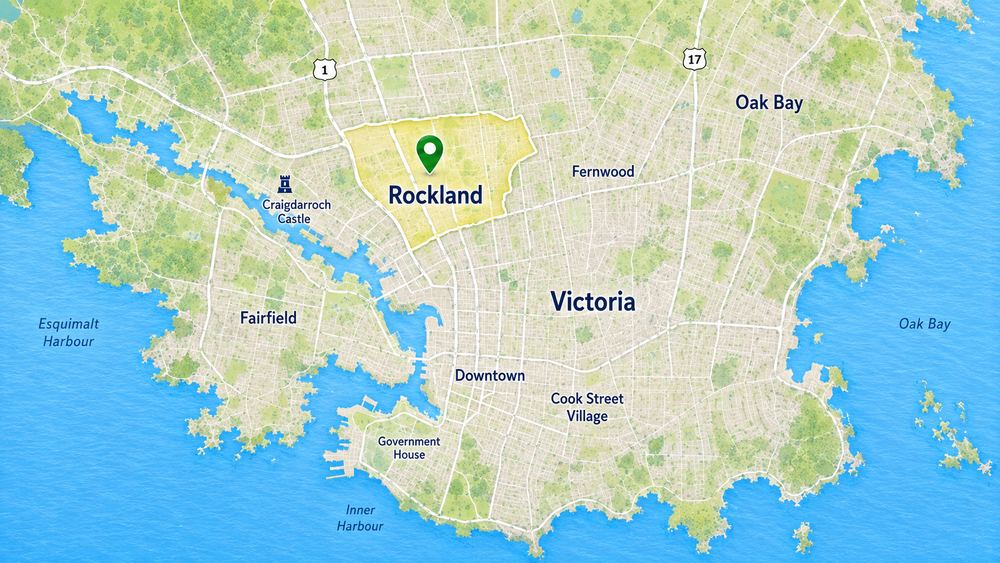
Rockland is highly central. Depending on the exact address, residents may be within easy reach of downtown Victoria, Cook Street Village, Oak Bay Avenue, Fairfield, Fernwood, Craigdarroch Castle, Government House, the Art Gallery, parks, transit, schools, restaurants, and local shops.
This is one of the key reasons Rockland remains desirable. It gives buyers central access without the same feel as living directly in the downtown core. For the right buyer, Rockland offers a rare mix of privacy, prestige, history, and walkability.
Rockland and Nearby Neighbourhoods
Rockland sits among several of Victoria’s most recognizable neighbourhoods. Fairfield lies to the south and southwest. Fernwood sits nearby to the north and northwest. Oak Bay and Oak Bay Avenue are to the east. Downtown Victoria is close to the west. This location gives Rockland residents access to several different urban and village-style areas without losing the neighbourhood’s residential identity.
Buyers comparing Rockland with Fairfield, Oak Bay, Fernwood, and downtown Victoria should pay attention to property type, age, parking, walkability, lot size, architecture, noise, and maintenance expectations. Rockland can feel more formal and historic than Fernwood, more central than Oak Bay, quieter than downtown, and less beach-oriented than Fairfield.
Rockland Real Estate
Rockland real estate includes detached character homes, luxury homes, estate residences, condos, townhomes, strata conversions, older rental properties, building lots, and redevelopment opportunities. The market is not uniform, and the same neighbourhood search can return very different property types.
A Rockland buyer may be looking at a restored heritage house, a legal multi-suite revenue property, a luxury condo, a large estate home, a hidden townhouse, or a redevelopment opportunity. That variety makes the area interesting, but it also means due diligence matters.
Buying in Rockland
Buying in Rockland requires a different mindset from buying in a newer subdivision. The value is often tied to architecture, location, land, history, gardens, restoration quality, and long-term scarcity. At the same time, older homes can bring complexity.
Important issues may include heritage designation, prior renovations, permits, oil tank history, knob-and-tube wiring, old plumbing, perimeter drains, roof condition, seismic considerations, chimneys, tree maintenance, suite legality, insurance, parking, and future development potential.
Rockland Area Guide Note
Rockland is one of Victoria’s most historically significant residential areas. Buyers should appreciate the architecture and setting, but also review older building systems, heritage status, renovation history, oil tank records, drainage, electrical updates, parking, strata documents where applicable, tree maintenance, and whether the home fits modern daily use.
Who Rockland Works Best For
Rockland can be an excellent fit for buyers who value history, architecture, mature landscaping, walkability, prestige, central location, and a neighbourhood with a real sense of identity. It can work for luxury buyers, character-home buyers, professionals, downsizers, investors, and people who want to live close to downtown without being in the middle of downtown.
It may be less ideal for buyers who want only newer homes, large modern garages, simple low-maintenance ownership, wide suburban streets, or uniform housing. Rockland rewards buyers who appreciate character and understand that older prestige properties often require more thought than newer homes.
Rockland Neighbourhood Summary
Rockland is one of Victoria’s original premier residential neighbourhoods. Its history reaches back to the era when wealthy pioneers built named estates and substantial homes close to the downtown core. Its streets still reflect that past through architecture, gardens, walls, mature trees, civic landmarks, and the layered pattern of old estates adapted over time.
For buyers, Rockland offers a rare combination of central Victoria convenience, historic identity, mature residential character, and architectural interest. It remains one of the city’s most distinctive neighbourhoods because it is difficult to duplicate what Rockland already has: history, setting, location, and atmosphere.
Rockland Real Estate & Homes for Sale
Use this guide to learn more about the Rockland neighbourhood, then compare current Rockland real estate listings, including houses, condos, townhomes, character homes, luxury residences, view homes, revenue properties, and strata conversions.
Browse current Rockland properties and compare listings by location, property type, architecture, condition, renovation quality, walkability, parking, garden setting, strata documents where applicable, and long-term ownership fit.