Highly Walkable
Employment, shopping, restaurants, entertainment, services, transit and the waterfront are concentrated within a compact area.


Real Estate Company
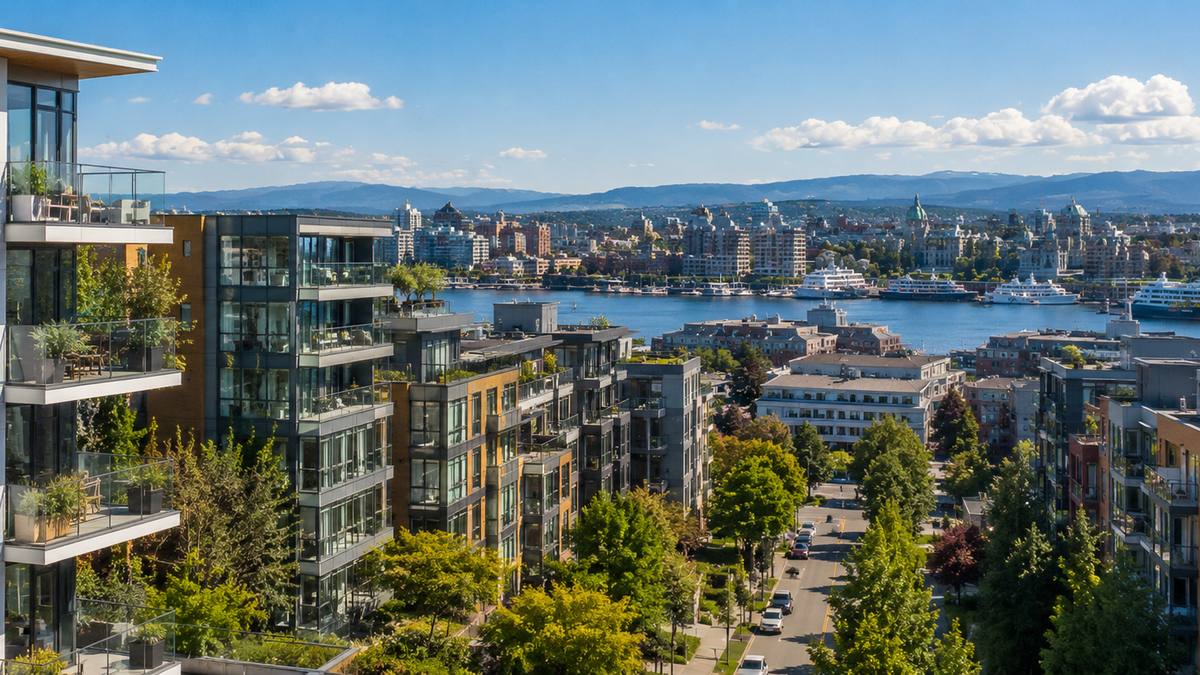
Explore Downtown Victoria, including the Inner Harbour, Old Town, Chinatown, Harris Green, the central business district, urban condo living, heritage streets, restaurants, shopping, parks, transportation and current real estate.
Downtown Victoria is the commercial, cultural, employment and tourism heart of the City of Victoria. It combines one of Canada's most recognizable historic harbourfronts with the region's largest concentration of condominium towers, heritage conversions, apartments, offices, hotels, restaurants, shops and entertainment venues.
The neighbourhood is compact but highly varied. The Inner Harbour and Government Street feel very different from Harris Green, Chinatown, Old Town, the Douglas Street office corridor or the quieter residential edges approaching Fairfield, Rockland, North Park and James Bay. Buyers comparing Downtown properties should therefore think in terms of individual blocks and buildings rather than treating the entire neighbourhood as one uniform market.
Downtown is now the principal location for attached housing growth within the City of Victoria. Newer towers and mixed-use developments continue to add residential density, particularly through Harris Green and along major corridors, while heritage policy remains important in Old Town and Chinatown.
Employment, shopping, restaurants, entertainment, services, transit and the waterfront are concentrated within a compact area.
Downtown contains Victoria's deepest inventory of apartment-style strata homes, concrete towers, lofts and mixed-use residences.
Old Town and Chinatown heritage buildings sit beside contemporary towers, offices, hotels and new mixed-use development.
The Inner Harbour, working harbour, marinas, waterfront paths and views remain central to Downtown's identity and value.
Downtown is better understood as a collection of distinct districts. Building type, street activity, views, heritage character and residential atmosphere can change substantially over only a few blocks.
The Inner Harbour is Victoria's most recognizable urban setting. Parliament Buildings, hotels, visitor attractions, marinas, waterfront promenades and Government Street create a highly active tourist and civic district.
Residential properties here trade heavily on harbour views, walkability and prestige, but buyers should also consider visitor activity, traffic, events, parking and seasonal intensity.
Old Town contains some of Victoria's strongest heritage character, including brick commercial buildings, converted warehouses, loft-style strata residences and narrow streets that reflect the city's nineteenth-century commercial development.
Heritage conversions can be highly distinctive, but construction, seismic upgrades, sound transfer, parking, elevators, windows and building-envelope history should be reviewed carefully.
Victoria's Chinatown is one of the neighbourhood's most historically significant districts and includes heritage storefronts, restaurants, cultural sites, residential conversions and newer development near Fisgard, Store and Government streets.
Buyers are often drawn to the architecture and walkability, while exact block, nightlife, loading activity, parking and surrounding redevelopment can materially affect livability.
Harris Green is Downtown's principal high-density residential growth district. It includes newer and recently completed condo towers, older apartment buildings, grocery stores, restaurants, professional services and rapid redevelopment along Yates, Johnson, Pandora, Cook and Vancouver streets.
This part of Downtown can offer practical day-to-day convenience and newer housing, but buyers should investigate future construction, tower separation, view protection, traffic, noise and evolving streetscapes.
The office and commercial core contains major employment, hotels, retail, transit, civic services and mixed-use buildings. Residential opportunities range from older strata buildings to newer towers immediately adjacent to the employment centre.
Walkability is excellent, but buyers should assess street exposure, bus activity, loading, construction, sunlight and the daily rhythm of the specific block.
Approaching Fairfield, Rockland, North Park and James Bay, Downtown becomes more residential and transitions into lower-scale neighbourhoods. These edges can appeal to buyers who want central access without living in the busiest part of the core.
Older low-rise strata buildings, boutique projects and character conversions may offer a different ownership experience from the newer high-rise market farther west.
Downtown Victoria real estate is overwhelmingly attached housing. Buyers can encounter concrete high-rises, newer mixed-use towers, heritage lofts, converted commercial buildings, older wood-frame condos, boutique strata projects, penthouses, live-work units and a limited number of townhomes or small-lot residential properties.
The market is unusually building-specific. Two suites with similar size and asking price can offer very different value depending on construction type, floor height, orientation, view, parking, storage, air conditioning, outdoor space, strata fees, insurance, reserve funding and the quality of the strata corporation.
Downtown also has a wider range of price-per-square-foot outcomes than many suburban condo markets. Compact newer units and premium view residences can command high rates per square foot, while older buildings may offer substantially more interior space for the same purchase price.
Buyers who value short trips to offices, restaurants, transit, entertainment and daily services.
Owners trading a detached home for lower maintenance, security, walkability and access to amenities.
Residents who want to walk, cycle or use transit for a large share of daily trips.
Purchasers prioritizing harbour, Olympic Mountain, city or sunset outlooks from upper-floor residences.
Buyers seeking smaller urban condos as an entry point into City of Victoria ownership.
People who travel frequently and value secure buildings, elevators and reduced exterior maintenance.
The strongest practical advantage of Downtown Victoria is concentration. Restaurants, cafes, offices, shops, grocery stores, pharmacies, professional services, theatres, museums, parks, the Inner Harbour, waterfront paths and major transit routes are all close together.
For many residents, that makes a lower-car or car-free lifestyle realistic. The trade-off is the normal intensity of an urban core: traffic, buses, deliveries, nightlife, construction, tourism, emergency services and street activity vary by block and time of day.
Buyers who are sensitive to noise should visit a prospective building in the morning, evening and on weekends. Floor level, window quality, orientation and whether the suite faces an internal courtyard or major street can be as important as the building address itself.
Waterfront promenades, marinas, hotels, civic landmarks and some of Victoria's most recognizable views.
The region's largest concentration of restaurants, pubs, theatres, galleries, music venues and nightlife.
Groceries, pharmacies, boutiques, major retailers, offices, medical services and everyday conveniences.
Dense pedestrian routes, cycling infrastructure and the region's strongest concentration of bus service.
Downtown is one of the principal areas where the City of Victoria intends to accommodate future population and housing growth. Taller residential and mixed-use development is particularly evident through Harris Green and along major corridors, while the harbour basin and heritage districts follow different urban-design priorities.
For condo buyers, future development is not an abstract planning issue. A vacant parcel, surface parking lot or low-rise commercial building beside a condo can become a substantial project. That can affect construction noise, sunlight, privacy, views and resale positioning.
Before buying a view unit, buyers should examine neighbouring parcels and current development applications rather than assuming an outlook is permanent. The same applies to quieter side streets that may change as the core becomes more residential.
On the other hand, new development can improve a location by adding groceries, restaurants, sidewalks, public realm improvements and newer housing. Downtown buyers should evaluate both the disruption and the longer-term neighbourhood effect.

Downtown Victoria developed around the Hudson's Bay Company's Fort Victoria, established in the 1840s on the Inner Harbour. The early settlement grew from a trading and working-harbour economy into the administrative and commercial centre of Vancouver Island and later the capital of British Columbia.
Wharf Street, Government Street, Bastion Square, Chinatown and Old Town still preserve important layers of that nineteenth-century commercial city. Warehouses, hotels, banks and merchant buildings that once served a port economy now contain restaurants, shops, offices, lofts and strata residences.
Victoria also experienced dramatic real-estate speculation before the First World War. Land values rose sharply during the late nineteenth and early twentieth centuries before the boom collapsed around 1912. Development stalled, real-estate firms disappeared and the local property market remained subdued for decades. That boom-and-bust period remains one of the more striking episodes in Victoria's development history.
By the post-war period, Downtown's role changed again as retailing, tourism, government, offices and residential development became more important. In recent decades, condominium construction has transformed the eastern and northern parts of the core, bringing a much larger permanent residential population into what had once been primarily a business, commercial and visitor district.
Use the dedicated Downtown property and condo hubs to compare current listings by building, price, location, construction, floor level, views, parking, strata fees and long-term ownership fit.
NOTE: MLS® property information is provided under copyright© by the Vancouver Island Real Estate Board and Victoria Real Estate Board. The information is from sources deemed reliable, but should not be relied upon without independent verification. This website may only be used by consumers for the purpose of locating and purchasing real estate. By registering on this website I/We consent to the collection, use and disclosure of personal information as described in our privacy policy.
The trademarks MLS®, Multiple Listing Service® and the associated logos are owned by The Canadian Real Estate Association (CREA) and identify the quality of services provided by real estate professionals who are members of CREA. Used under license.