Loading current Saanich character homes…
Currently Available — Current Saanich character listings
Average Listing Price — Current Saanich character average
Average Bedrooms — Current Saanich character average
Average Bathrooms — Current Saanich character average
Average Living Area — Interior living area
Average Price / Ft² — Current Saanich character average
.jpg)
Saanich Character Homes for Sale
Heritage cottages, post-war bungalows, mid-century modern houses and former farmhouses across Saanich East and Saanich West.
Saanich Character Homes, Heritage Houses & MLS® Listings
Browse current Saanich character homes for sale, including early-1900s cottages, restored farmhouses, post-war bungalows and mid-century modern houses throughout Saanich East and Saanich West.
Saanich’s character housing is noticeably different from the heritage stock closer to downtown. Where Fairfield, James Bay and Rockland are dominated by Victorian and Edwardian houses on compact city lots, Saanich grew outward from farmland and streetcar suburbs — so its older homes tend to be 1910s and 1920s cottages along the Gorge, converted or subdivided farm properties toward Prospect Lake and Interurban, and a large stock of post-war and mid-century houses on generous lots.
That difference usually shows up as more land, more parking and more suite potential for the money, and it is the main reason buyers priced out of Oak Bay or Fairfield character homes end up looking here. For a broader search you can also view all Saanich Properties for Sale.
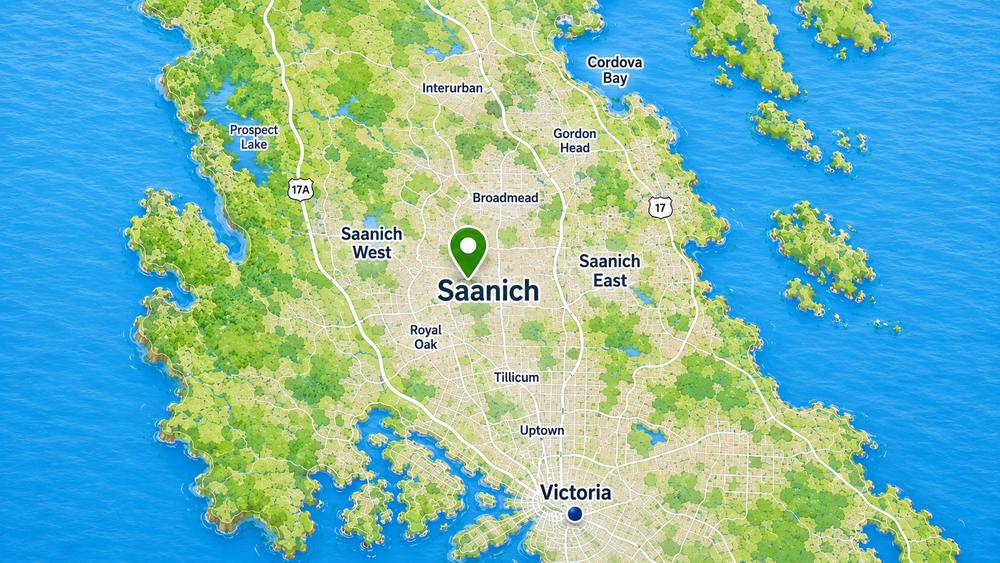
Character Homes for Sale in Saanich BC
A character home in Saanich generally means a house built before roughly 1960 that still carries its original architectural detail — fir floors, coved ceilings, original trim and mouldings, leaded or multi-pane windows, built-in cabinetry, a period fireplace. Saanich’s inventory spans a wide range, from modest 1920s cottages in the Gorge and Tillicum areas through to substantial older homes on acreage near Prospect Lake and waterfront properties in Cordova Bay.
Current inventory typically runs from entry-level cottages under $700,000 to restored estates and waterfront character properties past $5 million, and Saanich character homes generally carry a premium over the broader Saanich market on both price and price per square foot while taking somewhat longer to sell. You can review current figures on the Saanich Character Homes Market Report.
Saanich Mid-Century Modern Homes
Saanich holds most of Greater Victoria’s mid-century modern housing stock, and it is the part of the market most often overlooked by buyers searching only for “heritage” homes. The post-war subdivisions of Gordon Head, Cadboro Bay, Cedar Hill and parts of Cordova Bay were built out through the 1950s and 1960s, and a meaningful number of those houses were architect-influenced: low-slung rooflines, post-and-beam construction, clerestory windows, exposed structural timber, open-plan main floors and large west- or south-facing glazing oriented to a view.
Mid-century homes reward careful inspection. The qualities that make them desirable — expansive single-pane glazing, flat or low-pitch roofs, exposed beams, minimal eaves — are also the elements most likely to need attention, particularly around roof membranes, window replacement that respects the original proportions, and insulation levels that predate modern standards. A well-maintained example with its original lines intact is increasingly difficult to find, and buyers who value the style should expect to compete for the good ones.
Saanich Heritage Farmhouses & Former Farm Properties
Saanich is the only Greater Victoria core municipality with a working agricultural landscape, and that history left behind a stock of farmhouses that simply does not exist in Oak Bay, Fairfield or James Bay. Around Prospect Lake, Strawberry Vale, Interurban and the western edge of the municipality you will find late-1800s and early-1900s farmhouses on remnant parcels, some still on acreage, some on lots subdivided out of the original holding.
These properties carry their own considerations. Land within the Agricultural Land Reserve is subject to provincial rules that restrict subdivision and limit non-farm use, which affects what can be built, added or run as a business on the property. Many rely on well water and septic systems rather than municipal services, and outbuildings, barns and older additions are frequently unpermitted. Buyers should confirm ALR status, servicing, and the permit history of any outbuilding before removing subjects. For a sense of how this landscape developed, the history of Saanich covers the area’s agricultural origins.
Post-War Bungalows & 1950s Homes in Saanich
The single most common older-home type in Saanich is the post-war bungalow — modest, well-proportioned houses built from the late 1940s through the 1950s on regular lots across Cedar Hill, Quadra, Tillicum, Gordon Head and Maplewood. They are typically one level with a full basement, hardwood under the carpet, a central hallway plan and original fir or oak floors.
They remain popular for two practical reasons. First, they are among the most affordable ways into a detached Saanich home with real character detail. Second, the full basement and separate-entry potential make them the single most common source of secondary suites in the municipality, which is why so much of Saanich’s suite inventory sits in exactly this housing type.
Gorge & Tillicum Character Homes
The Gorge and Tillicum areas hold Saanich’s oldest concentrated residential stock. Development along the Gorge waterway began well before the surrounding municipality filled in, and the result is a mix of 1910s and 1920s cottages, small Craftsman houses and a scattering of larger period homes on waterway-facing lots. Prices here tend to sit below the Saanich character average, which makes the area a practical entry point for character buyers.
Older Gorge and Tillicum houses are more likely than newer Saanich stock to carry original knob-and-tube wiring, galvanized supply plumbing, and foundations that predate modern drainage practice. Waterway-adjacent lots also warrant attention to drainage and, where applicable, any shoreline or riparian setback that affects renovation and addition plans.
Cedar Hill, Quadra & Maplewood Character Homes
These central Saanich neighbourhoods contain a dense mix of 1920s through 1950s houses on flat, walkable streets near Cedar Hill Golf Course, Swan Lake and the Quadra corridor. The stock ranges from small early cottages to solid post-war bungalows and the occasional larger period home. Because these areas are central, well-serviced and close to schools and transit, they attract both families and buyers specifically seeking a character home with a mortgage helper.
Gordon Head & Cadboro Bay Character Homes
Gordon Head and Cadboro Bay were developed largely through the post-war decades on land that had been farm and orchard property, and the result is a strong concentration of 1950s and 1960s houses, including much of Saanich’s mid-century modern inventory. Proximity to the University of Victoria shapes this market: suite potential carries real weight here, and older homes near campus are frequently purchased with rental accommodation in mind. Cadboro Bay adds a small number of older waterfront and near-waterfront character properties.
Cordova Bay & Prospect Lake Older Homes
Cordova Bay contains a distinct pocket of older seaside cottages and 1950s and 1960s houses along and near the waterfront, some modest and original, others substantially rebuilt. Prospect Lake, on the western side of the municipality, offers a different character entirely — older homes on large lots and acreage with rural privacy, well and septic servicing, and in some cases lake access. Buyers comparing these two should also review Saanich waterfront homes, since older waterfront properties are often marketed on location rather than as character listings.
Saanich Character Homes with Suites
Saanich character homes are among the most common sources of secondary suites in Greater Victoria. Post-war bungalows and 1920s houses with full basements and separate entries were widely converted over the decades, and a large share of Saanich’s suite inventory sits in exactly this stock. That makes a character home one of the more practical routes to a Saanich home with a suite.
The caution is that age and suite legality are related. A suite added to an older house during a period of looser enforcement is considerably more likely to be unauthorized than one built into newer construction, and older conversions are also more likely to fall short on fire separation, egress window sizing, ceiling height and electrical standards. Confirm permits and zoning with the District of Saanich before relying on suite income for financing.
Character Homes and Luxury Homes in Saanich
At the upper end, Saanich character and luxury overlap. Restored farmhouses on acreage, substantial period homes in Cordova Bay, and architecturally significant mid-century houses on view lots are frequently marketed as Saanich luxury homes rather than as character listings. Buyers working at that level should search both categories, because the same property may appear under either description depending on how the listing agent positioned it.
Saanich Heritage Register & Heritage Designation
The District of Saanich maintains its own heritage register and its own designation process, separate from the City of Victoria’s. The distinction matters at the point of purchase. A property listed on a heritage register is recognized for its historic value but is not necessarily subject to binding restrictions, whereas a formally designated heritage property is protected by bylaw and alterations to protected features generally require municipal approval.
Before making an offer on an older Saanich home, confirm directly with the District of Saanich whether the property is on the register, formally designated, or neither, and what that means for the specific renovation you have in mind. The answer can materially affect timelines, permitted changes and cost, and it is not something to infer from an MLS® description.
Original Woodwork, Fir Floors & Period Details
The features buyers most often seek in Saanich character homes are old-growth fir flooring, original trim and baseboards, coved or beamed ceilings, built-in buffets and window seats, leaded or divided-light windows, and original fireplaces. In post-war bungalows the hardwood is frequently still intact beneath later carpet, which is one of the more common pleasant surprises in this market.
Original single-pane and wood-sash windows are the usual point of tension. They contribute significantly to a home’s character and are often repairable, but they underperform against modern glazing. Storm windows, sash restoration and weatherstripping can close much of that gap while keeping the original appearance, which tends to preserve value better than wholesale replacement with units that do not match the home’s proportions.
Knob-and-Tube Wiring & Electrical Upgrades
Saanich houses built before roughly 1950 may retain some original knob-and-tube wiring, and homes from the 1950s and 1960s often have 60-amp service that falls short of modern demand. Both matter beyond safety: many insurers decline to bind coverage on a home with active knob-and-tube, or require replacement within a set period, and that can affect completion. Confirm the electrical service size and whether any original wiring remains active as part of your inspection, and obtain an insurance quote before removing subjects rather than after.
Oil Tanks, Perimeter Drains & Foundations
Buried heating-oil tanks are a recurring issue in older Saanich properties. An abandoned tank left in the ground can represent a significant remediation liability, and contamination is the buyer’s problem once the sale completes. Tank scans are inexpensive relative to that risk and are worth ordering on any pre-1970 property.
Perimeter drainage is the other common item. Original clay or unlined drain tile reaches the end of its service life, and Saanich’s combination of clay soils and rock outcropping can concentrate water against a foundation. Signs of past water entry in a basement matter most in the houses where the basement contains — or is intended to contain — a suite.
Asbestos, Chimneys & Seismic Considerations
Asbestos was used in vermiculite insulation, sheet flooring, duct tape wrap, and textured ceilings well into the 1980s. It is generally not hazardous if undisturbed, but it directly affects renovation cost, since testing and abatement are required before demolition. Unlined or deteriorated masonry chimneys are also common in older Saanich homes and are frequently decommissioned rather than repaired.
On seismic performance, older houses in the region are commonly unbolted from their foundations and may have unreinforced masonry chimneys and cripple walls without bracing. These upgrades are relatively affordable when done alongside other basement or foundation work, and are worth pricing while you are still in your subject period.
Restored, Renovated & Original Saanich Character Homes
Character listings fall roughly into three groups, and the distinction is worth making before comparing prices. A restored home has had its period elements repaired and retained, and major systems updated behind them. A renovated home has been modernized, sometimes at the cost of the original detail. An original home is largely untouched — the most character, and the most deferred maintenance.
The premium generally attaches to homes that kept their character while quietly updating wiring, plumbing, drainage, roofing and insulation. A house stripped of its detail is competing against newer construction on newer construction’s terms, where it rarely wins. A fully original house can be excellent value provided the work ahead is priced honestly rather than assumed away.
Saanich Character Homes vs Victoria & Oak Bay Character Homes
Most buyers searching Saanich character homes are also looking at Fairfield, Rockland, James Bay and Oak Bay, and the trade-off is consistent. The downtown-adjacent neighbourhoods offer older and more architecturally formal housing — Victorian and Edwardian houses, denser heritage streetscapes, walkability to the city — typically on smaller lots and at a higher price per square foot.
Saanich generally delivers more land, more parking, better suite potential and a lower entry price, with housing that is newer on average and more varied in style. Buyers whose priority is a specific period of architecture usually end up closer to downtown; buyers who want an older home with room around it, a workshop, a garden or a mortgage helper usually end up in Saanich. It is worth comparing against character homes across Greater Victoria before narrowing down.
Buying an Older Home in Saanich
Older Saanich homes reward preparation. Budget for a longer inspection and consider specialist trades where warranted — an electrician where original wiring is suspected, a drainage contractor where there is evidence of water entry, an oil-tank scan on anything pre-1970. Confirm heritage register or designation status and any ALR implications directly with the municipality rather than relying on the listing. Verify suite legality separately from suite existence. Obtain an insurance quote during your subject period, since wiring, roof age and heating type can all affect whether coverage is available and at what cost.
None of this should discourage a purchase. Character homes in Saanich have held their value well precisely because the supply is fixed and slowly shrinking. The purpose of the due diligence is to make sure the price reflects the work the house actually needs.
Saanich Character Home MLS® Listings
Use this page to search current Saanich character homes, including Gorge and Tillicum cottages, Cedar Hill and Maplewood bungalows, Gordon Head and Cadboro Bay mid-century houses, and Prospect Lake and Interurban farmhouses. You can also review the Saanich Character Homes Market Report for current pricing, price per square foot and days on market.
Browse current Saanich character homes below, including houses, homes with suites, luxury homes, waterfront homes, view homes, and MLS® listings throughout Saanich East and Saanich West.
Saanich Character Homes: Frequently Asked Questions
What counts as a character home in Saanich?
There is no single official definition. In practice a Saanich character home is a house built before roughly 1960 that retains meaningful original architectural detail — fir floors, original trim and mouldings, coved or beamed ceilings, period windows, built-ins or an original fireplace. Saanich’s range is broader than the downtown-adjacent neighbourhoods, covering 1910s cottages, pre-war farmhouses, post-war bungalows and mid-century modern houses.
Which Saanich neighbourhoods have the most character homes?
The Gorge and Tillicum areas hold the oldest concentrated stock, largely 1910s and 1920s. Cedar Hill, Quadra and Maplewood carry a dense mix of 1920s through 1950s houses. Gordon Head and Cadboro Bay are predominantly post-war and contain most of Saanich’s mid-century modern inventory, while Prospect Lake, Strawberry Vale and Interurban hold former farmhouses on larger lots and acreage.
Are Saanich character homes cheaper than Oak Bay or Fairfield character homes?
Generally yes. Saanich character homes carry a premium over the broader Saanich market but typically sit below the Oak Bay and Fairfield equivalents, and usually come with more land and better suite potential. The trade-off is that Saanich stock is newer on average and less architecturally formal, with fewer Victorian and Edwardian houses and more post-war and mid-century housing.
Does Saanich have mid-century modern homes?
Yes, and Saanich holds most of Greater Victoria’s mid-century modern stock. The post-war subdivisions of Gordon Head, Cadboro Bay and Cedar Hill were built out through the 1950s and 1960s, and include post-and-beam houses with low rooflines, clerestory windows, open-plan main floors and large view-oriented glazing. Well-preserved original examples are increasingly scarce.
Does a heritage designation restrict what I can renovate?
It depends on whether the property is merely listed on the District of Saanich heritage register or formally designated. A register listing recognizes historic value without necessarily imposing binding restrictions. A formal designation is protected by bylaw, and alterations to protected features generally require municipal approval. Saanich runs its own register and process separately from the City of Victoria, so confirm the property’s exact status with the District before making renovation plans.
Do older Saanich homes have problems getting insurance?
They can. Active knob-and-tube wiring, 60-amp electrical service, aged roofing and oil heat are the usual obstacles, and some insurers decline coverage or require upgrades within a set period. Because a declined policy can affect your ability to complete, obtain an insurance quote during your subject period rather than after removing conditions.