Explore Vancouver Island homes, condos, townhomes, waterfront properties, view homes, acreages, building lots, rural estates, and current MLS® listings throughout the Island.
Vancouver Island Homes, Land and Real Estate for Sale
Browse current Vancouver Island properties for sale, including houses, condos, townhomes, waterfront homes, ocean-view properties, rural residences, farms, acreages, recreational properties, building lots, development land, and MLS® listings throughout the Island.
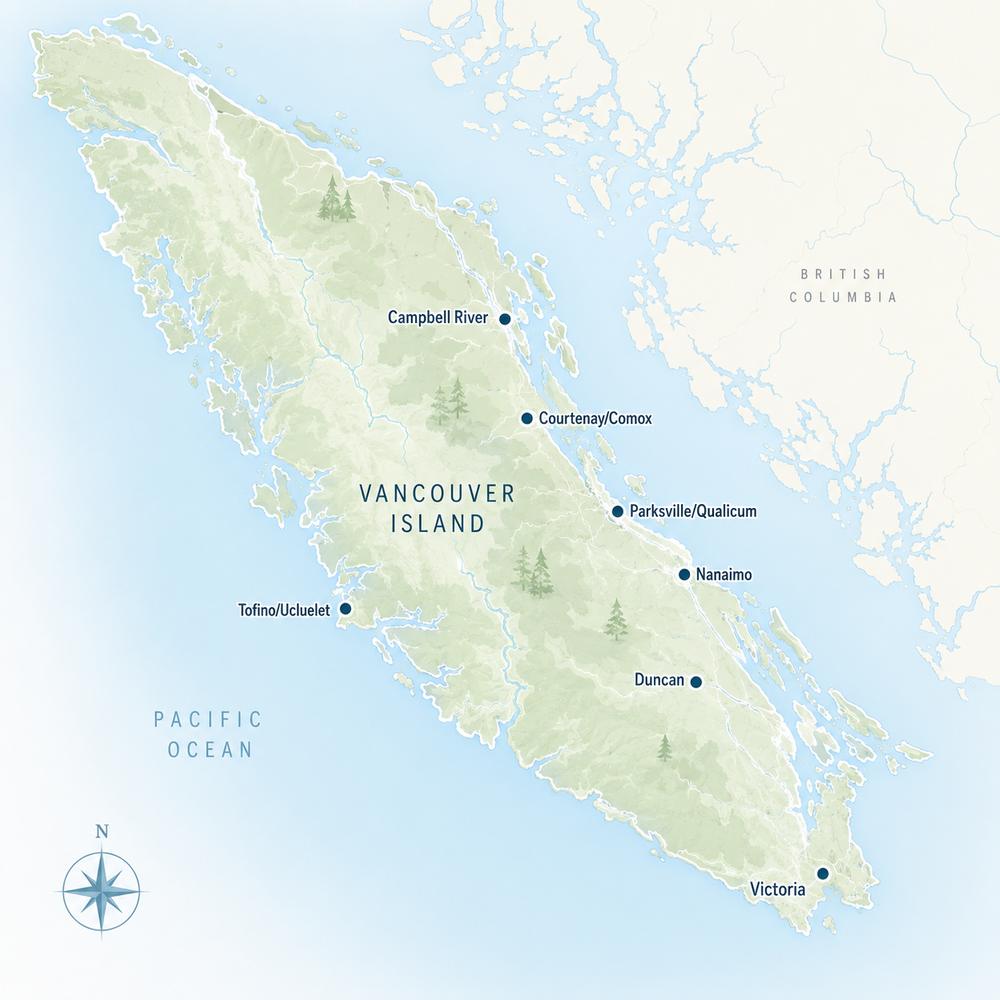
Vancouver Island contains a wide range of real estate markets. Buyers can compare urban properties in Greater Victoria and Nanaimo with coastal communities around Parksville and Qualicum Beach, rural acreages in the Cowichan Valley, mountain and ocean-view homes in the Comox Valley, and more remote properties around Campbell River and northern Vancouver Island.
A downtown Victoria condominium, a Nanaimo family house, a Comox Valley acreage, and a remote coastal property can involve very different values, services, transportation requirements, ownership costs, and lifestyles.
Vancouver Island properties for sale range from downtown condominiums and suburban family houses to oceanfront estates, rural acreages, hobby farms, forested parcels, recreational cabins, retirement residences, development properties, and remote coastal homes.
Real estate conditions vary substantially across the Island. Greater Victoria has the largest urban market, Nanaimo is an important central-Island centre, Parksville and Qualicum Beach offer established coastal markets, and the Comox Valley and Campbell River combine urban services with access to rural and recreational properties.
Why Buyers Choose Vancouver Island
Buyers are drawn to Vancouver Island for its coastal scenery, moderate climate, outdoor recreation, established communities, and ability to provide both urban convenience and rural privacy.
Depending on the location, residents may have access to beaches, forests, mountains, lakes, marinas, hiking trails, ski areas, golf courses, wineries, farms, cultural facilities, universities, hospitals, airports, and ferry terminals.
Vancouver Island Houses for Sale
Vancouver Island houses range from compact urban homes and newer suburban properties to character residences, executive houses, rural homes, coastal estates, houses with suites, and remote recreational properties.
Greater Victoria is the largest urban region on Vancouver Island and includes the City of Victoria, Saanich, Oak Bay, Esquimalt, View Royal, Langford, Colwood, Highlands, Metchosin, Central Saanich, North Saanich, Sidney, and surrounding communities.
The Cowichan Valley includes Duncan, Mill Bay, Shawnigan Lake, Cobble Hill, Cowichan Bay, Chemainus, Lake Cowichan, and surrounding rural areas. The region is known for farmland, vineyards, lakes, forested acreages, smaller communities, and access to both Victoria and Nanaimo.
Nanaimo is a major transportation, employment, education, health-care, and commercial centre. Parksville and Qualicum Beach are established coastal communities with beaches, golf courses, patio homes, condos, townhomes, detached houses, and rural properties.
The Comox Valley includes Courtenay, Comox, Cumberland, and surrounding rural and coastal areas. The region combines farmland, ocean access, mountain recreation, established urban services, and proximity to Mount Washington.
Campbell River is an important service centre for northern Vancouver Island and is associated with marine activity, fishing, forestry, aquaculture, tourism, construction, and outdoor recreation.
Buyers searching for farms, rural parcels, development sites, and building lots around the Comox Valley and Campbell River can use the Comox Valley and Campbell River land page.
Vancouver Island Condos for Sale
Vancouver Island condos may include downtown apartments, waterfront residences, retirement-oriented buildings, resort properties, newer developments, converted buildings, and lower-maintenance homes in smaller communities.
Vancouver Island townhomes may include conventional two-storey townhouses, patio homes, duplex-style strata residences, newer attached homes, and retirement-oriented properties.
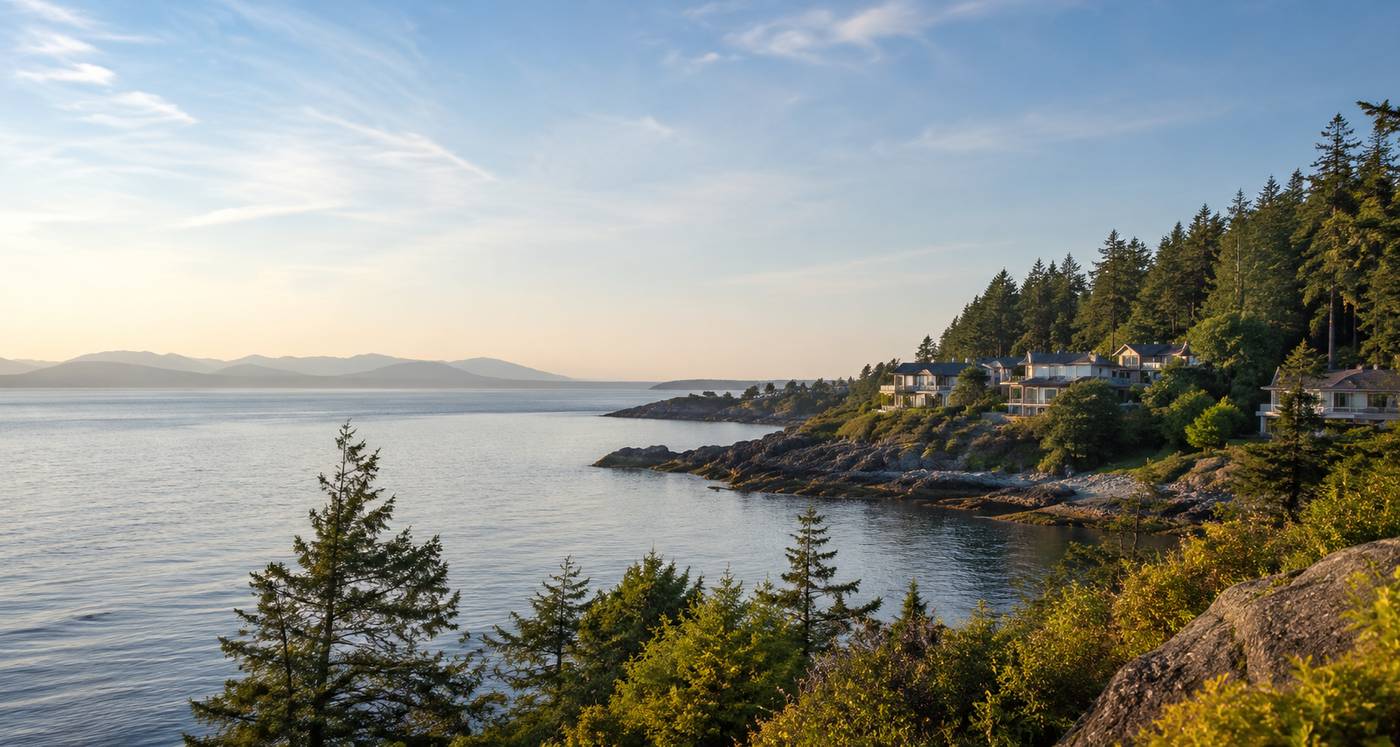
Vancouver Island waterfront real estate includes oceanfront homes, beach properties, harbour residences, lakefront homes, riverfront properties, marina-access homes, and undeveloped coastal land.
Waterfront buyers should investigate foreshore rights, erosion, flooding, tsunami mapping, riparian setbacks, environmental development permit areas, wells, septic systems, insurance, legal access, and the condition of docks or marine structures.
Vancouver Island View Homes
Vancouver Island view properties may overlook the ocean, mountains, lakes, harbours, valleys, cities, farmland, or surrounding forests. The quality and permanence of the view can significantly affect market value.
View-home buyers should consider orientation, sun exposure, neighbouring development potential, steep driveways, retaining walls, slope stability, wind exposure, and whether the principal rooms and outdoor areas take advantage of the outlook.
Vancouver Island Acreages, Farms and Land
Rural Vancouver Island offers hobby farms, equestrian properties, forested acreages, agricultural land, country estates, off-grid properties, homes with workshops, and parcels suited to privacy or recreational use.
When comparing Vancouver Island properties, pay close attention to community services, highway and ferry access, travel times, wells, septic systems, zoning, Agricultural Land Reserve restrictions, waterfront setbacks, wildfire exposure, insurance availability, internet and cellular service, medical access, building condition, renovation permits, and the depth of the local resale market.
Vancouver Island History
Vancouver Island has been home to Indigenous peoples for thousands of years. Coast Salish, Nuu-chah-nulth, and Kwakwaka’wakw nations established distinct communities, territories, economies, languages, trade networks, and cultural traditions throughout the Island long before European arrival.
The first recorded European expeditions reached the region during the eighteenth century. Spanish navigator Juan José Pérez Hernández explored parts of the Pacific Northwest coast in 1774, and British explorer James Cook reached the west coast of Vancouver Island in 1778. Later Spanish and British expeditions charted the coastline, established contact with Indigenous communities, and competed for influence along the northwest coast.
The maritime fur trade became an important early commercial activity. European, American, and Asian traders sought sea otter pelts and other valuable furs, while coastal Indigenous nations played central roles as traders, suppliers, navigators, and intermediaries. The fur trade brought wealth and new goods, but it also introduced conflict, disease, and major disruptions to established communities.
Fort Victoria and the Colony of Vancouver Island
In 1843, the Hudson’s Bay Company established Fort Victoria on the southern end of Vancouver Island. The location offered a protected harbour, agricultural potential, access to maritime trade routes, and a strategic position near the Strait of Juan de Fuca.
The British government created the Colony of Vancouver Island in 1849. James Douglas, a senior Hudson’s Bay Company official, became the colony’s second governor in 1851 and played a major role in the development of Victoria and the surrounding region.
Victoria grew from a trading post into the Island’s administrative, commercial, and transportation centre. Government buildings, warehouses, wharves, shops, residences, and institutions developed around the harbour as settlers, merchants, labourers, officials, and entrepreneurs arrived.
The Fraser Canyon Gold Rush
The Fraser Canyon Gold Rush of 1858 transformed Victoria almost overnight. Thousands of prospectors and fortune seekers arrived by ship and passed through the city on their way to the mainland goldfields. Victoria became a supply centre where miners purchased equipment, food, clothing, transportation, and mining licences.
The sudden influx accelerated construction, land speculation, shipping, banking, retail trade, and hotel development. Although the goldfields were located on the mainland, Victoria benefited enormously because it served as the principal port and outfitting centre for the rush.
Logging, Fishing, Agriculture and Coal Mining
As the nineteenth century progressed, Vancouver Island’s economy became more diverse. Logging developed into one of the Island’s most important industries as communities expanded and demand for lumber increased throughout the Pacific region.
Commercial fishing and fish processing also became major activities. Salmon, herring, halibut, shellfish, and other marine resources supported coastal communities, canneries, fleets, and export businesses.
Agriculture developed in areas with suitable soils and climates, particularly around Victoria, the Saanich Peninsula, the Cowichan Valley, and parts of central Vancouver Island. Farms supplied growing communities with dairy products, fruit, vegetables, meat, and grain.
Coal mining played a particularly important role around Nanaimo, Wellington, Cumberland, and other mining districts. Coal supported steamships, railways, industry, and export trade, while mining settlements attracted workers from many backgrounds and contributed to the growth of central Vancouver Island.
The Esquimalt and Nanaimo Railway
The completion of the Esquimalt and Nanaimo Railway in 1887 marked a major turning point in Vancouver Island transportation and settlement. The railway connected communities along the eastern side of the Island and made it easier to move people, timber, coal, agricultural products, and manufactured goods.
The railway also affected land ownership and development. Large land grants associated with the railway influenced settlement patterns, resource extraction, subdivision, and the long-term ownership of extensive areas of Vancouver Island.
Twentieth-Century Growth
During the twentieth century, Vancouver Island became increasingly urban and connected. Victoria expanded as the provincial capital, while Nanaimo developed as a major commercial, transportation, and service centre. Courtenay, Campbell River, Port Alberni, Duncan, Parksville, and other communities also grew as roads, ports, rail connections, and public services improved.
Forestry, pulp and paper production, fishing, shipbuilding, military activity, construction, tourism, government, education, and health care all contributed to the Island’s economy. The development of highway connections and expanding ferry service made travel between Island communities and the mainland more practical.
Tourism and Outdoor Recreation
Tourism became increasingly important as visitors were drawn to Vancouver Island’s mild climate, coastal scenery, forests, beaches, mountains, wildlife, historic communities, and recreational opportunities.
Victoria developed into an internationally recognized visitor destination, while Tofino, Ucluelet, Parksville, Qualicum Beach, the Comox Valley, Campbell River, and other regions attracted travellers interested in fishing, boating, hiking, surfing, skiing, camping, wildlife viewing, and coastal recreation.
Conservation and Protected Areas
Environmental conservation has played a major role in the Island’s modern history. Provincial parks, national parks, ecological reserves, protected watersheds, regional parks, and conservation lands have been established to protect forests, shorelines, wildlife habitat, cultural sites, and recreational areas.
Pacific Rim National Park Reserve, Strathcona Provincial Park, Carmanah Walbran Provincial Park, and numerous smaller protected areas preserve important examples of Vancouver Island’s coastal, mountain, river, lake, and old-growth forest environments.
Modern Vancouver Island
Today, Vancouver Island has a diverse economy supported by government, health care, education, technology, construction, tourism, forestry, fishing, agriculture, marine industries, military employment, retail, and professional services.
Greater Victoria has a substantial public-sector, education, health-care, tourism, construction, and technology economy. Nanaimo functions as a central-Island commercial and transportation centre, while other regions depend more heavily on tourism, retirement migration, resource industries, agriculture, military employment, marine activity, and outdoor recreation.
The Island now contains major urban centres, suburban communities, farming districts, retirement destinations, remote coastal settlements, Indigenous communities, resource towns, resort areas, and recreational properties. Its history continues to shape local land ownership, settlement patterns, architecture, transportation, community identity, and real estate development.
Explore Vancouver Island
Vancouver Island MLS® Listings
Use the Vancouver Island MLS® listings page to compare current houses, condos, townhomes, waterfront homes, view properties, rural residences, farms, acreages, recreational properties, building lots, and development land throughout the Island.




 Area Guide
  Houses
  Townhomes
  Waterfront
  View Homes
  Acreages & Land