Search detached houses, family homes, waterfront residences, view homes, luxury properties, rural houses, homes with suites and MLS® listings throughout Vancouver Island.
Browse current Vancouver Island houses for sale, including urban family homes, suburban detached houses, character residences, waterfront homes, ocean-view properties, rural houses, luxury estates, homes with secondary suites and recreational properties.
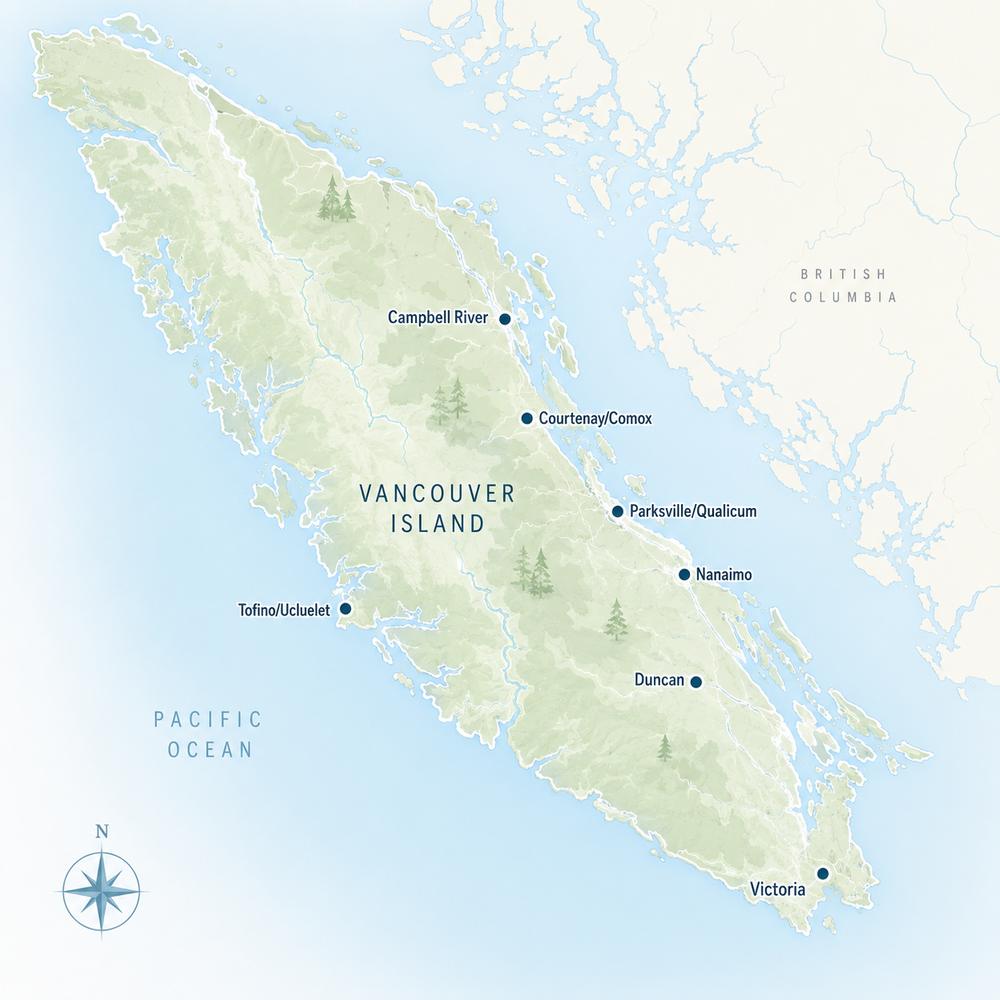
Vancouver Island contains numerous distinct housing markets. Buyers can compare established neighbourhoods in Greater Victoria with detached homes in Duncan and the Cowichan Valley, family houses around Nanaimo, coastal residences in Parksville and Qualicum Beach, mountain and ocean-view homes in the Comox Valley and more remote properties around Campbell River and northern Vancouver Island.
Prices, services, construction styles, transportation requirements and local market conditions vary considerably across the Island. A house in Victoria, a rural Cowichan property and a remote northern Vancouver Island residence may provide completely different ownership experiences.
Vancouver Island houses for sale range from compact urban residences and established family homes to newly constructed properties, character houses, waterfront estates, rural homes, hobby farms, recreational cabins and remote coastal residences.
The Island is not one uniform real estate market. Housing values, inventory, construction, services and buyer demand can vary substantially between southern Vancouver Island, the Cowichan Valley, Nanaimo, Oceanside, the Comox Valley, Campbell River and communities farther north.
Buyers should evaluate each location according to employment, health care, schools, shopping, transportation, ferry and airport access, municipal services, travel times and the depth of the local resale market.
Buyers are drawn to Vancouver Island houses for the combination of coastal scenery, moderate climate, established communities, outdoor recreation and the ability to choose between urban convenience, suburban neighbourhoods, coastal living and rural privacy.
Depending on the location, residents may have convenient access to beaches, forests, mountains, lakes, marinas, hiking trails, ski areas, golf courses, farms, wineries, universities, hospitals, airports and ferry terminals.
Detached houses also generally provide more private outdoor space, storage, parking and renovation flexibility than most condominium or townhouse properties. Some homes include workshops, detached garages, secondary accommodation, garden suites, larger lots or room for recreational vehicles and boats.
Greater Victoria Houses for Sale
Greater Victoria is Vancouver Island’s largest urban region. It includes the City of Victoria, Saanich, Oak Bay, Esquimalt, View Royal, Langford, Colwood, Highlands, Metchosin, Central Saanich, North Saanich, Sidney and surrounding communities.
The region offers everything from compact heritage houses near downtown Victoria to suburban family homes, waterfront residences, luxury estates, houses with suites, equestrian properties and rural acreages.
The City of Victoria contains established residential neighbourhoods with character houses, heritage properties, renovated family homes, infill construction and houses with basement suites. Lot sizes are generally smaller than in suburban and rural municipalities, but residents may benefit from proximity to employment, shopping, schools, parks and the Inner Harbour.
Saanich contains a broad mixture of urban, suburban and semi-rural housing. Oak Bay is known for established neighbourhoods, character residences, luxury homes and oceanfront properties. Both municipalities contain highly localized markets in which street, school catchment, lot quality, renovation level and proximity to the water can substantially influence value.
Langford, Colwood, View Royal, Highlands and Metchosin provide a wide variety of housing. Options range from newer subdivisions and family homes to waterfront properties, view houses, rural acreages and custom-built estates.
The West Shore has experienced substantial development, but lot sizes, terrain, road access and neighbourhood character vary widely between individual areas.
Saanich Peninsula Houses
Central Saanich, North Saanich and Sidney offer family homes, waterfront properties, rural residences, acreages, retirement-oriented houses and homes near marinas, beaches and agricultural areas.
Buyers should investigate zoning, Agricultural Land Reserve restrictions, wells, septic systems, airport noise, marine exposure and access to municipal services when comparing Peninsula properties.
Cowichan Valley Houses for Sale
The Cowichan Valley includes Duncan, Mill Bay, Shawnigan Lake, Cobble Hill, Cowichan Bay, Chemainus, Lake Cowichan and surrounding rural communities.
Housing choices include suburban family homes, lakefront residences, rural houses, hobby farms, forested acreages, equestrian properties, newer subdivisions and established homes in smaller communities.
The region is known for farmland, vineyards, lakes, forests and its location between Victoria and Nanaimo. Travel times can vary substantially, so buyers who commute should carefully compare highway access and daily driving requirements.
Nanaimo is one of Vancouver Island’s principal employment, education, health-care, transportation and commercial centres. Its detached housing market includes older central neighbourhoods, ocean-view homes, newer subdivisions, waterfront properties, rural residences and family houses at a wide range of prices.
Parksville and Qualicum Beach are established coastal communities offering detached houses, patio-style homes, retirement properties, waterfront residences, golf-course homes and rural properties in surrounding areas.
Lantzville, Ladysmith, Cedar and Nanoose Bay provide additional opportunities for buyers seeking larger lots, ocean views, rural surroundings or convenient access to Nanaimo.
The Comox Valley includes Courtenay, Comox, Cumberland and surrounding rural and coastal communities. It combines established urban services with farmland, ocean access, mountain recreation and proximity to Mount Washington.
Buyers can compare family houses in Courtenay, coastal and executive homes in Comox, character and newer houses in Cumberland, and rural residences throughout the surrounding valley.
Properties outside the principal urban areas may rely on wells and septic systems. Rural buyers should also examine zoning, access, drainage, Agricultural Land Reserve status, outbuildings and the condition of private services.
Campbell River is an important service and employment centre for northern Vancouver Island. The local market includes established family neighbourhoods, newer subdivisions, ocean-view homes, waterfront properties, rural houses and recreational residences.
The area is associated with marine activity, fishing, forestry, aquaculture, tourism, construction and outdoor recreation. Buyers may find larger properties outside the urban centre, but should consider travel distances, road conditions, wells, septic systems and access to services.
Northern Vancouver Island includes communities such as Port Hardy, Port McNeill, Port Alice, Alert Bay and smaller coastal settlements. Housing prices may be lower than in larger southern markets, but inventory, employment, services and resale demand can also be more limited.
Properties may include conventional family houses, waterfront homes, rural residences, recreational cabins and homes associated with forestry, fishing, aquaculture and tourism-based communities.
Buyers considering remote locations should carefully investigate travel requirements, medical access, building condition, insurance availability, internet and cellular service, water and septic systems, road maintenance and the availability of local contractors.
Vancouver Island Waterfront Houses for Sale
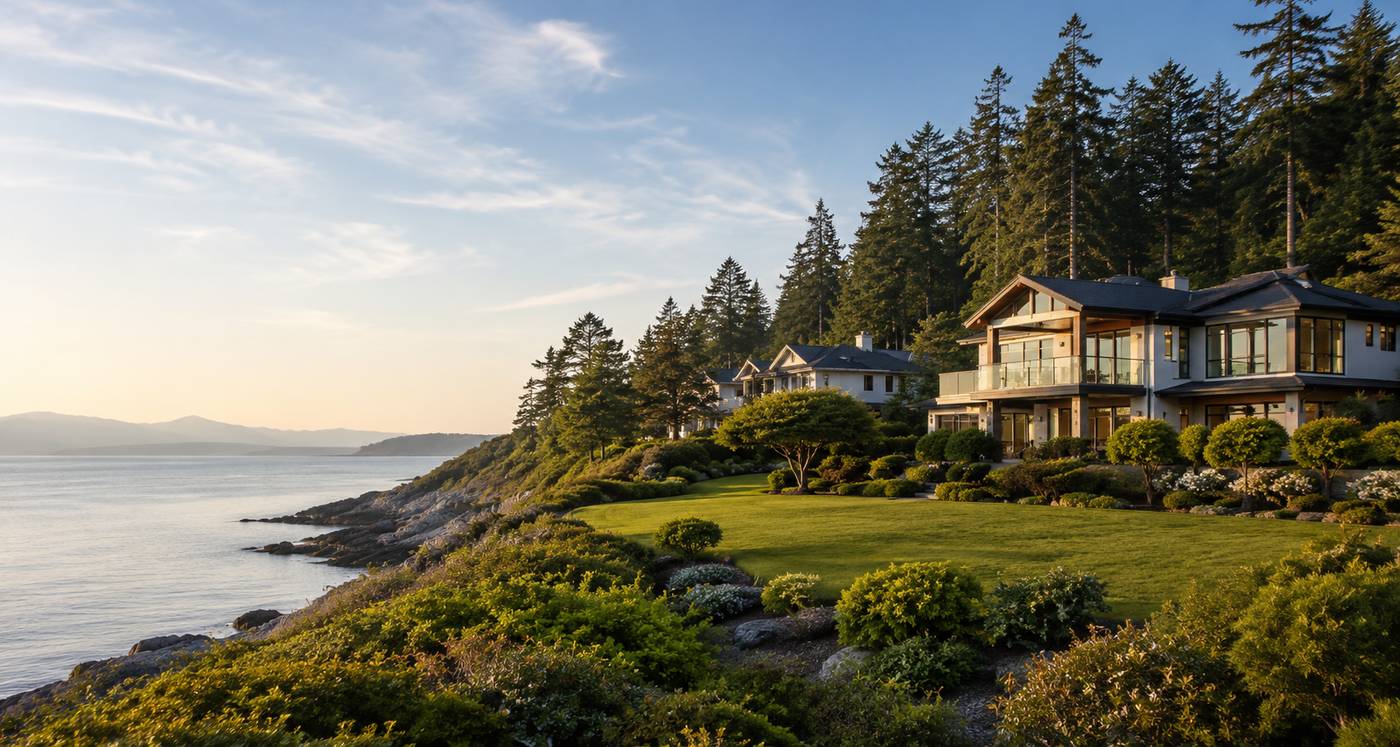
Vancouver Island waterfront houses include oceanfront estates, beach houses, harbour residences, lakefront homes, riverfront properties and houses with marina or dock access.
Waterfront value depends on more than the presence of water. Exposure, beach quality, swimming conditions, usable shoreline, privacy, orientation, sun, views, legal access and the condition of marine structures can all substantially affect marketability.
Buyers should investigate foreshore rights, erosion, flooding, tsunami mapping, riparian setbacks, environmental development permit areas, seawalls, docks, wells, septic systems and insurance availability.
Vancouver Island view houses may overlook the ocean, mountains, lakes, harbours, valleys, cities, farmland or forests. The quality, breadth and permanence of a view can have a substantial effect on property value.
Buyers should determine whether the principal rooms, patios and outdoor areas take advantage of the outlook. A dramatic view from an upper bedroom may be less valuable than a slightly less expansive view from the kitchen, living room and primary outdoor space.
Other considerations include orientation, sun exposure, neighbouring development potential, steep driveways, retaining walls, slope stability, wind exposure and additional exterior-maintenance requirements.
Vancouver Island Luxury Houses for Sale
Luxury houses on Vancouver Island include oceanfront estates, architect-designed residences, large view homes, private rural compounds, equestrian estates and extensively renovated character properties.
High-end properties are often difficult to compare because value may depend on a combination of land, waterfront quality, architecture, construction, privacy, views, landscaping, outbuildings and location.
Buyers should examine replacement cost, deferred maintenance, mechanical systems, water and septic infrastructure, marine improvements, renovation permits, environmental restrictions and the size of the likely resale market.
Vancouver Island houses with suites may include authorized secondary suites, older in-law accommodation, basement apartments, garden suites, carriage houses and detached accessory dwellings.
A suite can help offset ownership costs or provide accommodation for extended family, but buyers should not assume that existing secondary accommodation is legally permitted.
Confirm zoning, building permits, fire separation, ceiling height, parking, electrical work, plumbing, insurance requirements and any municipal licensing rules. Buyers should also determine whether the suite is vacant, occupied by a tenant or subject to an existing tenancy agreement.
Vancouver Island Rural Houses and Acreages
Rural Vancouver Island offers houses on acreages, hobby farms, equestrian properties, forested parcels, agricultural land, country estates, off-grid homes and properties with workshops or extensive outbuildings.
Rural properties may provide privacy and usable land, but the quality of the house is only one part of the purchase. Access, drainage, topography, water supply, septic capacity, zoning, soil, wildfire exposure and the condition of outbuildings can be equally important.
Buyers should obtain appropriate inspections and review well records, water tests, septic information, surveys, easements, road agreements, Agricultural Land Reserve restrictions and environmental development permit areas.
Older, Renovated and Newly Built Houses
Vancouver Island contains houses from many different construction periods. Older homes may offer character, established landscaping and central locations, but can also require upgrades to wiring, plumbing, drainage, foundations, insulation, roofing and heating systems.
Renovated properties should be examined carefully to determine whether the work was cosmetic or comprehensive. Buyers should review permits and determine whether structural changes, additions, suites and major mechanical upgrades were properly completed.
Newer houses may provide better energy efficiency and modern layouts, but buyers should still investigate drainage, grading, building-envelope details, warranty coverage, neighbourhood construction and future development around the property.
Vancouver Island House-Buying Note
When comparing houses across Vancouver Island, pay close attention to local services, highway and ferry access, travel times, wells, septic systems, zoning, Agricultural Land Reserve restrictions, waterfront setbacks, wildfire exposure, insurance availability, internet and cellular service, medical access, renovation permits, building condition and the depth of the local resale market.
Vancouver Island Housing and Settlement History
Vancouver Island has been home to Indigenous peoples for thousands of years. Coast Salish, Nuu-chah-nulth and Kwakwaka’wakw nations established distinct communities, territories, economies, languages, trade networks and cultural traditions throughout the Island long before European arrival.
The first recorded European expeditions reached the region during the eighteenth century. Spanish navigator Juan José Pérez Hernández explored parts of the Pacific Northwest coast in 1774, and British explorer James Cook reached the west coast of Vancouver Island in 1778.
Later settlement, resource development, transportation routes and government activity created very different housing patterns across the Island. Victoria developed around government and maritime trade, while Nanaimo and Cumberland expanded around coal mining. Forestry, fishing and agriculture influenced many smaller communities.
Fort Victoria and Southern Vancouver Island
In 1843, the Hudson’s Bay Company established Fort Victoria on the southern end of Vancouver Island. The location offered a protected harbour, agricultural potential, access to maritime trade routes and a strategic position near the Strait of Juan de Fuca.
The British government created the Colony of Vancouver Island in 1849. Victoria subsequently developed into the Island’s administrative, commercial and transportation centre.
Many of Greater Victoria’s oldest residential neighbourhoods grew outward from the harbour and early transportation routes. This history remains visible in the area’s character houses, heritage buildings, street layouts and established gardens.
Resource Communities and Island Housing
Logging, fishing, agriculture and coal mining played major roles in Vancouver Island’s development. Resource activity supported the growth of communities around Nanaimo, Wellington, Cumberland, Campbell River, Port Alberni and northern Vancouver Island.
Housing in these communities developed around local employment, transportation and access to natural resources. Some neighbourhoods retain older workers’ houses and modest postwar homes, while other areas have experienced extensive redevelopment and new construction.
The Esquimalt and Nanaimo Railway
The completion of the Esquimalt and Nanaimo Railway in 1887 marked an important change in Vancouver Island transportation and settlement. The railway connected communities along the eastern side of the Island and made it easier to move people, timber, coal, agricultural products and manufactured goods.
Railway-related land grants also influenced ownership, resource extraction, subdivision and long-term development patterns across large areas of Vancouver Island.
Modern Vancouver Island Housing
During the twentieth and early twenty-first centuries, Vancouver Island became increasingly urban and connected. Victoria expanded as the provincial capital, Nanaimo developed as a major commercial and transportation centre, and communities such as Courtenay, Campbell River, Duncan, Parksville and Port Alberni continued to grow.
The Island now contains urban neighbourhoods, suburban subdivisions, farming districts, retirement communities, remote coastal settlements, Indigenous communities, resource towns, resort areas and recreational properties.
This variety is one of Vancouver Island’s principal attractions, but it also means that buyers should compare houses within their appropriate local markets rather than relying on Island-wide averages alone.
Explore Vancouver Island
Search Vancouver Island Houses and MLS® Listings
Use the Vancouver Island MLS® listings page to compare current detached houses, waterfront homes, view properties, luxury residences, rural houses, homes with suites, recreational properties and houses on acreages throughout the Island.




 Area Guide
  Townhomes
  Waterfront
  View Homes
  Luxury Homes
  Acreages & Land